Huaqiangbei: What Foreigners Actually Get Scammed On (and How to Not)
Huaqiangbei is safe for tourists but not scam-free. Common risks include counterfeit electronics, inflated tourist prices, and bait-and-switch on phones. Here's a floor-by-floor guide based on 200+ tours we've led through these buildings.
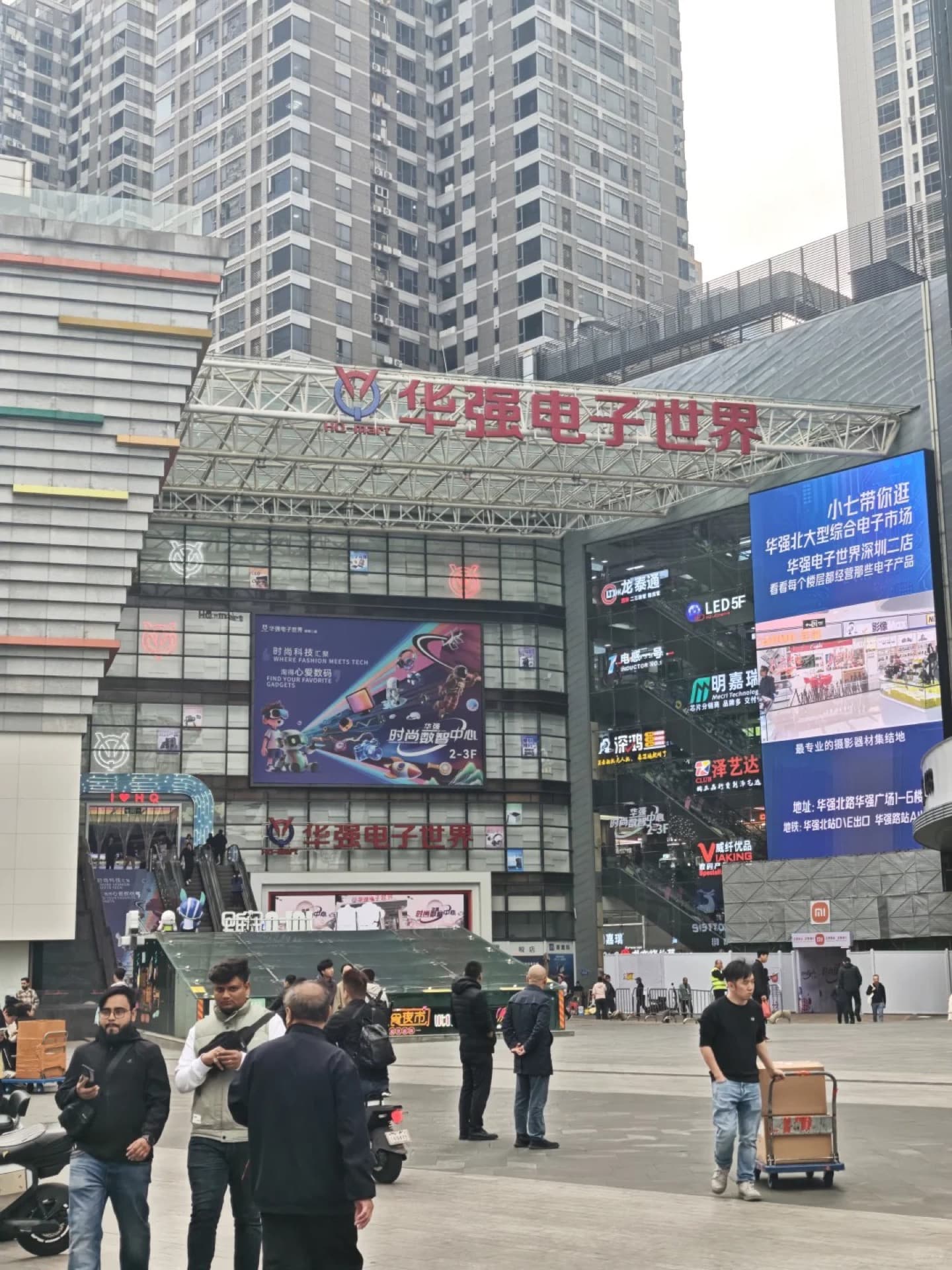
Is Huaqiangbei Safe for Foreign Tourists?
Huaqiangbei is a physically safe pedestrian commercial district for foreign tourists, with the real risk being financial scam patterns rather than crime. Huaqiangbei sits in central Futian District with security cameras, regular police patrols, and 100,000+ daily visitors across the major mall complexes. According to La Roja Travel guest experience data from 2024 and 2025, our data shows that across more than 200 tours we have led through Huaqiangbei buildings, no guest has reported a violent-crime incident during a market visit. First, the most common financial risks are counterfeit electronics sold as genuine, inflated tourist-facing prices reaching 300% to 500% markup, and bait-and-switch packaging tactics. Second, ground-floor stalls facing tourist foot traffic carry the highest scam exposure, while upper-floor wholesale stalls serving B2B buyers stay more honest. Additionally, this guide gives a floor-by-floor scam pattern map so a tourist can navigate Huaqiangbei without losing money to predictable traps.
Is Huaqiangbei a Tourist Trap?
Huaqiangbei is a working B2B wholesale electronics market that hosts tourists rather than a tourist trap built for them. Huaqiangbei sits in central Futian District as a busy commercial district with security cameras, regular police patrols, and roughly 100,000 daily visitors moving across the major mall buildings. According to La Roja Travel guide observations from 2024 and 2025, our data shows that real businesses source components in the upper-floor wholesale stalls every working day, while ground-floor tourist stalls operate under different pricing logic. First, violent crime stays essentially nonexistent across the entire pedestrian district during normal operating hours. Second, the so-called "danger" is purely financial: a tourist pays too much or buys a product that is not what the seller claimed. Additionally, knowing the 5 most common scam patterns and the 3 anchor towers eliminates the vast majority of foreigner-specific risk for any visitor walking through Huaqiangbei.
The 5 Most Common Scams (and How to Avoid Each)
1. Counterfeit phones sold as genuine
How it works: A stall displays what looks like a new iPhone or Samsung. The price seems too good — ¥800 for what should cost ¥6,000. They claim it's "factory direct" or "export surplus." It is a clone running modified Android that mimics iOS appearance.
How to spot it: Any phone priced below 60% of official retail is fake. No exceptions. Legitimate new phones at Huaqiangbei are priced 5–10% below official Apple/Samsung stores, not 80% below.
What to do: If you want a genuine phone at a discount, go to the 3rd or 4th floor of Feiyang Times Building (飞扬时代大厦) where established dealers sell verified stock. Ask them to boot the phone and show the serial number verification on Apple's website while you watch.
2. Inflated "tourist prices" on components
How it works: Ground-floor stalls in SEG Plaza price items at 3–5x wholesale rate when they see a foreign face. A USB-C cable that locals buy for ¥3 gets quoted at ¥15–25. An Arduino board that costs ¥35 wholesale is priced at ¥120.
How to spot it: If it is your first visit, you will not know local prices. That is the whole point — information asymmetry.
How to avoid: Always visit upper floors (3F+) first, where wholesale buyers shop and prices are posted. Note those prices. Then if you want to browse ground-floor stalls, you know the real number and can negotiate from there. Counter-offer at 30–40% of the quoted price.
3. Bait-and-switch packaging
How it works: Seller shows you a working product (e.g., a portable SSD, power bank, or speaker). You agree on a price. They "go to the back" to get a sealed box. The sealed box contains a cheaper version, a defective unit, or sometimes just a weighted brick.
How to avoid: Insist on opening the box before paying. Test the actual unit you are taking home, not a display model. Any seller who refuses this is signaling bad intent. Walk away.
4. "Special deal" commission tours
How it works: Someone near the metro exit offers to "help" you navigate the market or offers a "special factory tour." They lead you to specific stalls that pay them commission, where prices are 200–300% higher than normal.
How to avoid: Never follow unsolicited guides. If you want a guide, book one in advance from a verified operator — not someone who approaches you on the street.
5. Quality misrepresentation on components
How it works: Sellers claim components are "new" or "A-grade" when they are actually refurbished, rejected from QC, or B-grade pulls from recycled PCBs. Common with: IC chips, capacitors, LED strips, screens.
How to spot it: Look for inconsistent date codes, solder residue on pins, or scratches on IC packages. If you are buying in bulk (100+ units), insist on testing a sample first. For single purchases, buy from shops with posted return policies (usually 2F+ in SEG).
Floor-by-Floor Guide: Where to Go for What
SEG Plaza (赛格广场) — The Main Building
| Floor | What You'll Find | Tourist-Friendly? | Price Level |
|---|---|---|---|
| 1F | Phone accessories, cases, cables | ⚠️ Highest markup | Tourist prices |
| 2F | LED products, displays, tools | ✅ Reasonable | Near wholesale |
| 3F | Electronic components (resistors, ICs, PCBs) | ✅ For makers | Wholesale |
| 4F | Components continued, connectors | ✅ For makers | Wholesale |
| 5F | Development boards, Arduino, Raspberry Pi | ✅ Great for hobbyists | Fair |
| 69F | Observation deck (paid entry) | ✅ Best view | ¥40 ticket |
Huaqiang Electronics World (华强电子世界)
| Floor | What You'll Find | Notes |
|---|---|---|
| 1F | Phones (new + refurbished) | Mixed quality — verify everything |
| 2F | Phone repairs, screens, batteries | Good for repairs, fair prices |
| 3F | Audio equipment, speakers, headphones | Some genuine brands at discount |
| 4F | Cameras, drones (non-DJI clones) | Mostly cheap brands, not worth it |
Ming Tong Digital City (明通数码城)
Best for: laptop repairs, used business laptops (ThinkPads), computer peripherals. More professional atmosphere, fewer tourist-targeted stalls. English is occasionally spoken here by repair technicians who deal with Hong Kong customers.
Feiyang Times Building (飞扬时代大厦)
Best for: genuine phones at slight discount, phone accessories. More established dealers with fixed prices and return policies. This is where informed locals buy phones.
How to Negotiate (Real Price Guide)
| Item | Tourist Price (1F) | Real Price (3F+) | You Should Pay |
|---|---|---|---|
| USB-C cable (1m) | ¥15–25 | ¥3–5 | ¥5–8 |
| 10,000mAh power bank | ¥120–180 | ¥45–65 | ¥50–80 |
| Arduino Uno clone | ¥100–150 | ¥25–35 | ¥30–45 |
| Raspberry Pi 5 (genuine) | ¥600–800 | ¥450–500 | ¥480–520 |
| Bluetooth speaker (no-name) | ¥80–150 | ¥20–40 | ¥25–50 |
| LED strip (5m, RGB) | ¥60–100 | ¥15–25 | ¥20–30 |
| Drone (non-DJI, toy grade) | ¥300–500 | ¥80–120 | ¥100–150 |
Negotiation script that works:
- Ask the price (they quote high)
- Look unimpressed, say "太贵了" (tài guì le — too expensive)
- Counter at 30–40% of quoted price
- They counter at 60–70%
- You settle at 40–50% or walk away
- If they let you walk away, your offer was too low. Try next stall.
If you do not speak Chinese, showing your counter-offer on a calculator app works fine. Most sellers use this method with each other anyway.
How Does Huaqiangbei Compare to Akihabara and Sim Lim Square?
| Feature | Huaqiangbei (Shenzhen) | Akihabara (Tokyo) | Sim Lim Square (Singapore) |
|---|---|---|---|
| Size | 20+ buildings, 70,000+ stalls | ~500 stores, 4 main buildings | 1 building, 6 floors |
| Price level | Lowest globally (wholesale) | Retail (premium) | Mid-range |
| Scam risk | Medium (negotiation required) | Very low (fixed prices) | Low-medium |
| Component access | Full (chips to finished products) | Limited (consumer electronics) | Limited |
| Language barrier | High (Chinese only) | Medium (some English) | Low (English common) |
| For makers/hobbyists | ⭐⭐⭐⭐⭐ Best in world | ⭐⭐⭐ Good | ⭐⭐ Basic |
| For consumer shopping | ⭐⭐⭐ Requires knowledge | ⭐⭐⭐⭐⭐ Easy | ⭐⭐⭐⭐ Easy |
Huaqiangbei is a B2B wholesale market with negotiable prices, while Akihabara and Sim Lim Square are retail electronics malls with fixed price tags. Huaqiangbei runs on negotiation across roughly 200,000 vendors, where the same component can swing 30% between adjacent stalls based on buyer knowledge and quantity. According to La Roja Travel guide observations from 2024 and 2025, our data shows that Huaqiangbei consistently delivers the lowest absolute prices for components and bulk goods globally, while Akihabara and Sim Lim deliver lower scam risk for first-time consumer buyers. First, the wholesale-market structure makes Huaqiangbei the right destination for makers, prototype builders, and hardware professionals who can verify quality independently. Second, the same structure makes Huaqiangbei riskier for casual consumer shopping without insider knowledge or a guide. Additionally, Akihabara and Sim Lim Square remain better defaults for tourists who want a guaranteed-genuine retail experience without the negotiation overhead.
Payment Methods That Protect You
- Alipay/WeChat Pay: Standard payment. No built-in buyer protection for market purchases.
- Cash (RMB): Accepted everywhere. Gives you negotiation leverage ("I only have ¥50 cash" is effective). Harder to dispute if scammed.
- Credit card: Almost never accepted at individual stalls. Only at the few formal shops on upper floors.
Best practice: Pay with Alipay/WeChat (creates a transaction record with the seller's merchant ID) and test the product before paying. If you discover a problem later, you can dispute through the platform — though success rates are low for market purchases.
Best Time to Visit
- Weekday 10 AM–2 PM: Least crowded, sellers less aggressive, best for browsing
- Weekday 2 PM–5 PM: Busier but still manageable, more wholesale buyers around (good for seeing real prices)
- Weekend: Very crowded, more tourist-focused sellers active on ground floor, harder to negotiate
- Avoid: Chinese public holidays (National Day week, Chinese New Year) — many stalls closed
Going Alone vs. With a Guide
| Alone | With Guide | |
|---|---|---|
| Cost | Free (plus purchases) | Included in a 4-hour combined private tour |
| Time efficiency | 3–4 hours to figure out layout | 45-minute interest-led market section |
| Purchase decisions | You research and inspect products | You still confirm prices and inspect products |
| Language | Need Chinese or a translation app | Guide helps with navigation, questions, and basic translation |
| Route | Choose your own buildings and stalls | Market exploration followed by Nanshan tech stops |
| Best for | Repeat visitors, Chinese speakers, makers | First-timers, limited time, non-Chinese speakers |
Our Huaqiangbei Deep Dive tour starts with a guided introduction to the electronics ecosystem and interest-led market exploration, then continues to Nanshan for autonomous driving, drone delivery, INNO100, and Xiaomi EV Space.
Explore Our Huaqiangbei Tour →
Frequently Asked Questions
Is it worth visiting Huaqiangbei if I'm not buying electronics?
Yes — even without buying anything, Huaqiangbei is a sensory experience unlike any other market in the world. The sheer scale (20+ buildings of electronics), the energy of wholesale trade happening in real time, and the LED-lit pedestrian street at night are worth the visit purely as cultural tourism. Budget 1–1.5 hours for a walk-through without shopping.
Can I bargain in English?
Partially. Most ground-floor sellers know numbers in English and can use a calculator to negotiate. For complex requests (specific components, bulk orders, quality questions), you will need Chinese or a translator app. DeepL and Google Translate camera mode work passably for reading signs and basic communication.
Are the "DJI drones" sold at Huaqiangbei real?
Some are, most are not. Genuine DJI products at Huaqiangbei cost nearly the same as the official DJI store (which is a 10-minute metro ride away in Nanshan). Any DJI drone priced significantly below official retail is either refurbished, a display model, or counterfeit. For genuine DJI products, just visit DJI headquarters directly.
What should I definitely NOT buy at Huaqiangbei?
Avoid: smartphones (high fake risk unless you know how to verify), "brand name" headphones (mostly clones), camera lenses (counterfeits are excellent copies but optically inferior), and anything "sealed" that the seller will not let you open. These categories have the highest scam-to-legitimate ratios.
Is Huaqiangbei good for buying components for hardware projects?
Excellent — arguably the best place in the world. Floors 3–5 of SEG Plaza have every component imaginable at wholesale prices. If you know what you need (bring part numbers), you can source things here that would take weeks to order online. Many hardware startup founders fly to Shenzhen specifically for this.
How do I get to Huaqiangbei?
Metro Line 2 or Line 7 to Huaqiang Road Station (华强路站), Exit A. You emerge directly onto the Huaqiangbei pedestrian street. From Hong Kong, take the high-speed train to Futian Station (14 minutes), then metro Line 2 northbound for 2 stops.
Can I ship purchases home?
Yes — several logistics shops in the area offer international shipping (DHL, FedEx, SF Express). For small items, pack them in your luggage. For larger orders (bulk components, heavy items), shops can arrange shipping for ¥50–200 depending on weight and destination. Keep all receipts for customs declaration.
Key Terms
New to Huaqiangbei, SEG Electronics Market, or Futian? See our full Shenzhen tech travel glossary for definitions of every term used in this guide.
The Bigger Picture
This guide focuses on scams. For the full Huaqiangbei overview — three must-visit towers, transit from anywhere, DIY vs guided, how the district compares to Akihabara and Sham Shui Po — see our Shenzhen Huaqiangbei complete guide (2026).
Related Articles
Huaqiangbei Shopping Guide 2026: What to Buy and Check in Shenzhen's Electronics Market
Plan a first visit to Huaqiangbei: markets and Metro stations, a practical shopping checklist, product testing, and self-guided or private tour options.
Shenzhen Huaqiangbei: The Complete Guide to the World's Largest Electronics Market (2026)
Huaqiangbei is a 1.45 km² electronics district in central Shenzhen with 10+ multi-floor malls, 30,000+ stalls, and every consumer chip, component, drone, and gadget you can imagine. This guide covers the 3 must-visit towers, what actually works vs what looks like a scam, how to get there from anywhere in Shenzhen, and when a private guided tour beats DIY. Updated April 2026.
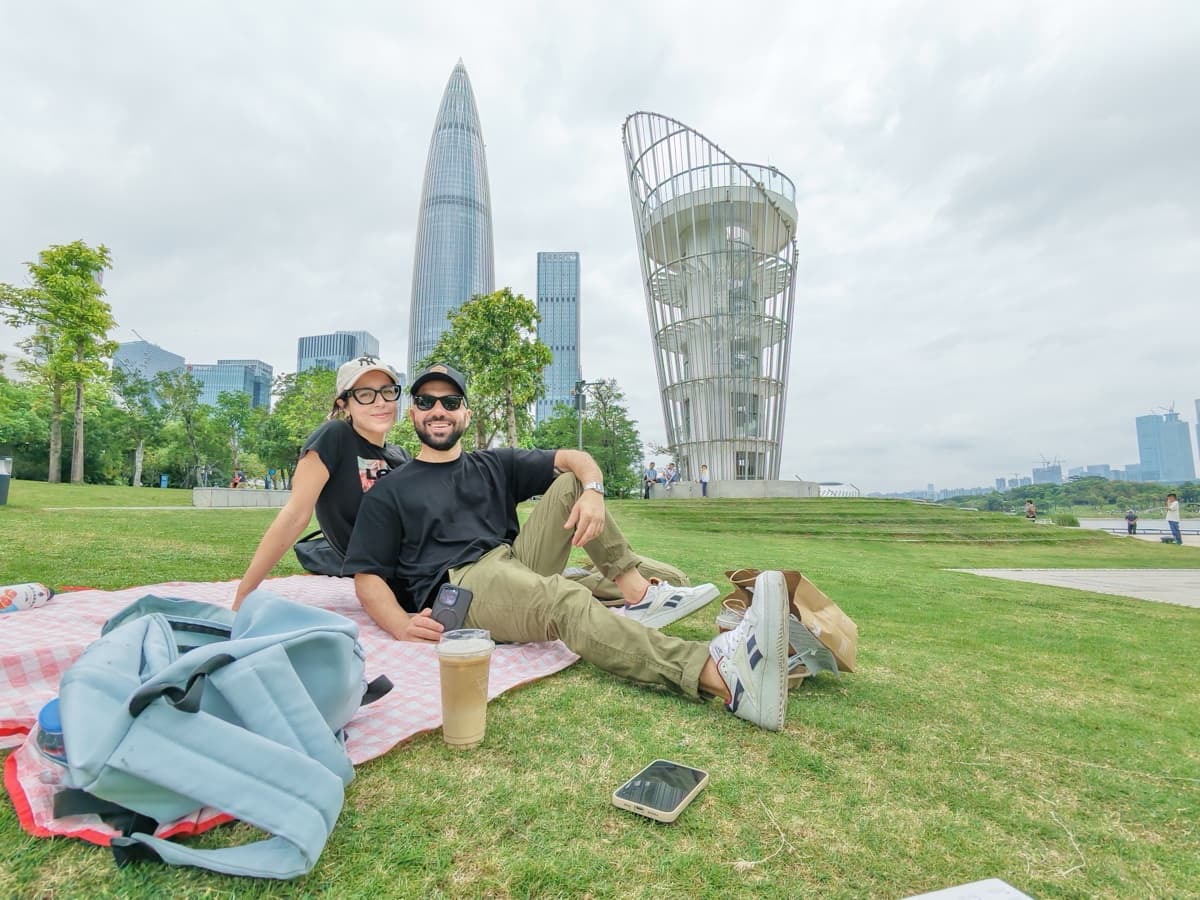
INNO100 Shenzhen Guide: Robots, 3D Printing and Booking
Plan an INNO100 visit at Shenzhen Bay Culture Square: opening hours, transport, robot demonstrations and how to arrange a 3D-printing workshop.