Huaqiangbei Shopping Guide 2026: What to Buy and Check in Shenzhen's Electronics Market
Plan a first visit to Huaqiangbei: markets and Metro stations, a practical shopping checklist, product testing, and self-guided or private tour options.
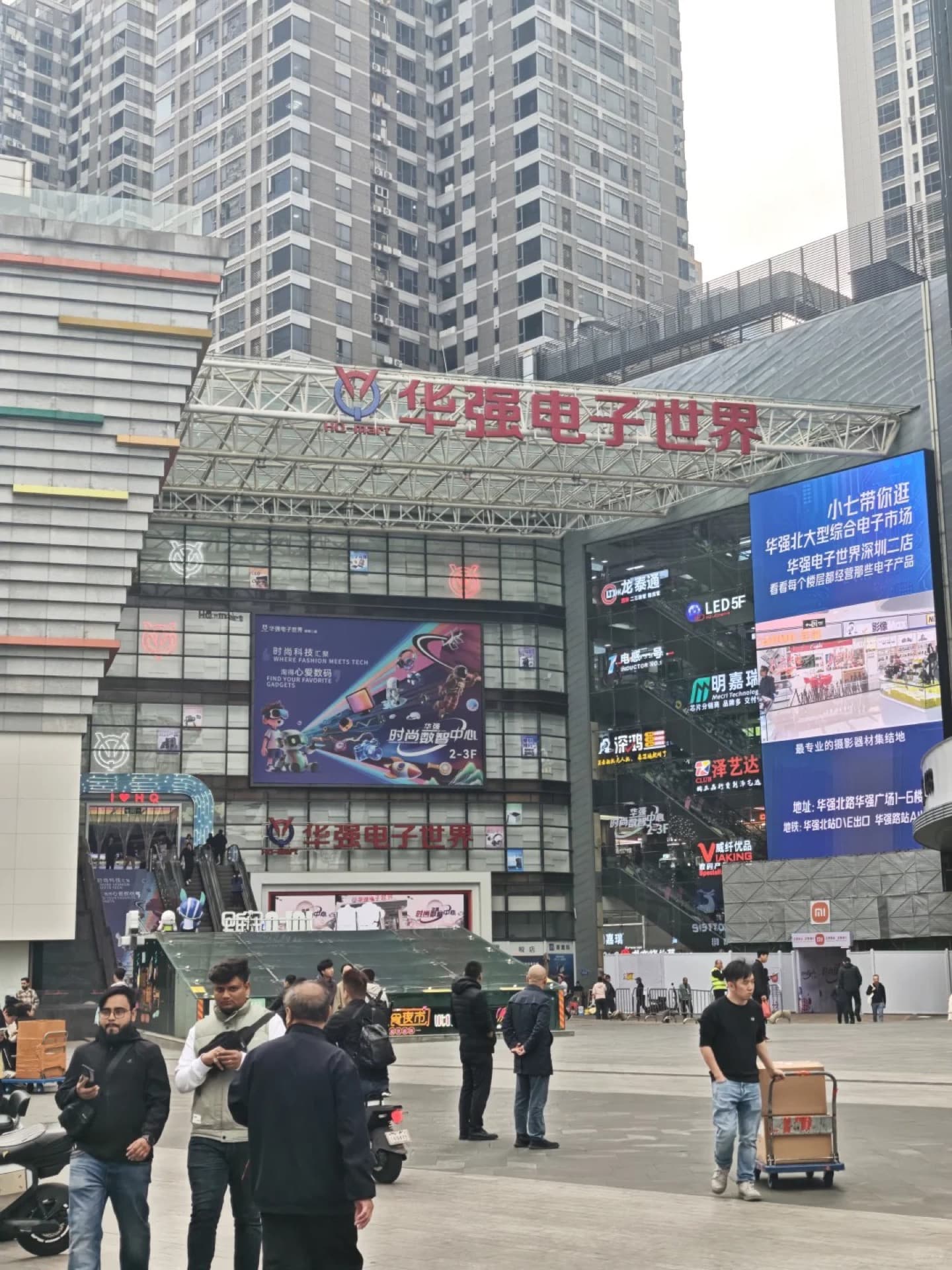
Huaqiangbei (华强北) is an electronics shopping district in Shenzhen's Futian District, with multiple markets rather than one building. For a first visit, choose one market, bring a short list of products or components, and test the exact item before paying. A low quoted price is only useful when the model, condition, accessories and after-sales terms match what you need.
This guide focuses on shopping decisions and planning a visit. The cover is an illustration combining market and technology scenes, not a photograph of a single location. Public sources and our published tour routes were checked on 27 September 2026; stall inventory, floor layouts and prices need confirmation during your visit.
What Is Huaqiangbei?
Huaqiangbei includes electronics markets, retail shops and businesses serving the hardware industry. It can be interesting even if you are not buying: a component, a replacement part and a finished consumer product can lead to quite different conversations with sellers.
Shenzhen's June 2024 account of the district identifies SEG Electronics Market and Huaqiang Electronics World as two established markets. An August 2026 report describes both component trading and smart consumer products, including a hardware selection center in the Electronic Technology Building. These reports provide background; they are not live inventories or guarantees about an individual seller.
Explore Independently or With a Guide?
Go independently if you enjoy browsing, can explain what you want with photos or model numbers, and have time to compare sellers. A guided visit suits travelers who want an English-speaking companion and a planned route combining the market with other technology experiences.
Prefer to explore independently?
Choose one market and a short shopping list. Use the checks below to compare like-for-like products. Use the self-guided plan.
Combine Huaqiangbei with Shenzhen technology
A 4-hour private tour with an English-speaking guide. Start at Huaqiangbei Metro Station, Exit A, explore the electronics market, then continue to Nanshan for the published technology route. Purchases are separate.
Price for 2 adults
CN¥1,600
total · CN¥800/adult
Better rates for larger groups: CN¥430/adult at 5 adults
The 2.5-hour Inside Shenzhen Small Group meets in Nanshan and does not visit Huaqiangbei. The market tour does not include factory access, workshop admission or a guaranteed shopping discount.
Starting in Hong Kong? The private Hong Kong-to-Shenzhen day tour is a separate 8-hour itinerary meeting at West Kowloon, with Huaqiangbei, an English-speaking guide, return train/ferry tickets and transport in Shenzhen. Check its party-size price and entry requirements before booking; meals and visa fees are excluded.
Which Markets Should You Look For?
| Name to save in your map app | How to use it when planning |
|---|---|
| SEG Electronics Market — 赛格电子市场 | A starting point for an electronics-market visit. Ask the information desk for your product category instead of relying on an old floor map. |
| Huaqiang Electronics World — 华强电子世界 | Another market name to research. Check the exact building or branch in the map pin before meeting a seller. |
| Electronic Technology Building — 电子科技大厦 | The August 2026 city report describes a smart-hardware selection center here. Confirm visitor access and the products you want to see. |
SEG Plaza and SEG Electronics Market are related landmark and market names, not two independent stops to count twice. Save the market entrance as well as the building name. Different businesses in the same tower may have different access arrangements.
A directory at the entrance is more useful for finding a current stall than a fixed floor-by-floor list. Take a photo of the building sign, floor and stall number before walking away from something you might buy later. Ask before photographing people or products.
What Should a First-Time Visitor Consider Buying?
Our suggestion is to start with something you can evaluate and use, rather than a fixed “must-buy” basket. These are comparison categories, not claims that any product is cheaper or genuine merely because it is sold in Huaqiangbei.
| If you are looking at… | Check before paying | A reason to leave it |
|---|---|---|
| Phone cases, stands or cable organizers | Fit with your actual phone and case; hinge or fastening quality; included parts | The seller cannot demonstrate compatibility |
| USB cables, chargers or hubs | Exact model, power specifications, plug type and operation with your device; relevant product documentation | Vague specifications or a demonstration using a different unit |
| Earbuds or small speakers | Pairing with your phone, both audio channels, microphone, controls and charging | App or account requirements you cannot use at home |
| Development boards, modules or components | Part number, voltage, pin layout, documentation, quantity and whether substitutes are acceptable | A visually similar part is offered as an unexplained substitute |
| Camera or drone accessories | Exact device model and physical compatibility; distinguish a third-party accessory from the original brand | A generic item is presented as original without evidence |
For a phone, laptop or other expensive device, agree whether it is new, used, repaired or refurbished, and which regional version it is. Check the account state, language, network compatibility and warranty coverage you will actually have at home. A short demonstration cannot establish long-term battery health or prove every internal part is original.
For a branded purchase, use the manufacturer's own seller and warranty information. For batteries or anything you will fly with, check your airline's current carriage rules before buying. The district is not a blanket guarantee of authenticity, safety certification or international support.
How to Compare Prices and Ask Questions
Compare the same specification and quantity at more than one seller. Write down the model, condition, included accessories and total price in CNY. A wholesale quote for a large quantity is not the price for one item; a price for a bare component may exclude the parts needed to use it.
These simple questions work with a translation app:
| English | Chinese |
|---|---|
| What is the price for one item? | 一个多少钱? |
| Is this new or refurbished? | 这是全新的还是翻新的? |
| Can I test this exact item? | 可以测试我要买的这一件吗? |
| Does this include all the accessories? | 这个价格包含所有配件吗? |
| What are the return and warranty terms? | 退换货和保修条件是什么? |
| Please write the model and total price on the receipt. | 请在收据上写明型号和总价。 |
There is no useful universal rule to start bargaining at a fixed percentage of the asking price. Make an offer based on a comparable quote, and be prepared to leave if the item or terms remain unclear. A guide can help communicate; that does not establish a guaranteed discount.
Ask which payment methods a seller accepts before spending time negotiating. Bring a backup way to pay and read our payment guide for international visitors. After paying, keep the receipt, seller contact, stall location and any written return agreement together. Do not assume an overseas return will be practical.
A Simple Self-Guided Visit
This is a suggested sequence, not a timed route verified against every current stall:
- Choose a starting market. Save its Chinese name and map pin. Pick one item or category you would like to understand.
- Read the entrance directory. Ask for the relevant category and confirm the floor before going upstairs.
- Compare before buying. Record a first quote, look at another seller, and check that both quotes cover the same item and quantity.
- Test and document. Test the unit you are taking away and agree the receipt and after-sales terms before payment.
- Leave time to stop. Take a break before deciding on an expensive purchase. You do not need to buy something to make the visit worthwhile.
A visit focused on browsing can be much shorter than sourcing a list of specific parts. Leave a flexible block in your day instead of combining shopping with a tightly timed onward booking.
Getting to Huaqiangbei
Huaqiang Road (华强路) and Huaqiang North / Huaqiangbei (华强北) are different Metro stations. Shenzhen's official Metro guide lists Huaqiang Road on Line 1 and Huaqiang North on Lines 2 and 7. Use the station and exit nearest your chosen market, following current station signs and your map app.
If you are joining our 4-hour private market and technology tour, its published meeting point is Huaqiangbei Metro Station, Exit A. That is a tour meeting point, not a claim that Exit A is best for every independent market visit.
From Hong Kong, plan the cross-border journey before the local Metro trip. See the Hong Kong-to-Shenzhen travel guide for the transport choices and entry-planning sources. A market visit or tour booking does not determine your eligibility to enter mainland China.
Maker Spaces, Factories and Workshops
A retail market, a maker space and a factory are different kinds of visit. A company address or a mention in an old guide does not establish public access. If you want soldering, prototyping or a workshop, ask the organizer for the activity, language, duration, equipment, fee and confirmed date before traveling.
Our published market and technology tour is a visitor itinerary. It does not include automatic access to startup offices, laboratories or production lines. For a specialized visit, send an itinerary inquiry naming the activity you want to do.
Frequently Asked Questions
Is Huaqiangbei worth visiting if I am not buying electronics?
Yes, if you are interested in browsing components and consumer technology. Choose a market, ask respectful questions and treat buying as optional. It is a working shopping district, so a demonstration or workshop needs its own arrangement.
Are electronics always cheaper at Huaqiangbei?
No. Compare the exact model, condition, accessories and warranty with a price you can obtain at home. Travel, luggage and after-sales support may matter more than a lower shelf price. This guide does not provide a guaranteed savings percentage.
Can I buy just one item rather than wholesale quantities?
Ask the seller for the single-item price and minimum quantity. Conditions vary by seller and product. A quotation for a batch of components should not be treated as a retail offer for one piece.
What time do the markets open?
There is no single opening time for the whole district. Check your chosen building's current information and contact a specific seller before traveling for an appointment. Opening hours for a building do not guarantee every counter is staffed throughout that period.
Do I need to speak Chinese?
Photos, exact model numbers and a translation app help explain a shopping request. Do not assume every seller offers English service. A guided itinerary provides an English-speaking guide, while independent shopping lets you set your own pace.
Does the Shenzhen Small Group tour visit Huaqiangbei?
No. Inside Shenzhen's 2.5-hour Small Group takes place in Nanshan. Choose the 4-hour private market and technology itinerary if Huaqiangbei is a priority, or browse independently using this guide.
Can I visit a factory or maker workshop on the same ticket?
A market visit does not include factory or workshop admission. Arrange a named activity separately and wait for the organizer's confirmation before adding it to your itinerary.
Related Articles
Huaqiangbei: What Foreigners Actually Get Scammed On (and How to Not)
Huaqiangbei is safe for tourists but not scam-free. Common risks include counterfeit electronics, inflated tourist prices, and bait-and-switch on phones. Here's a floor-by-floor guide based on 200+ tours we've led through these buildings.
Shenzhen AI Powerhouses 2026: Where Tourists Can See Hunyuan, Pangu & AI in Action
Shenzhen hosts China's two largest enterprise AI labs — Tencent Hunyuan in Binhai and Huawei Pangu in Bantian — but tourist access is limited. This 2026 guide maps the five places a foreign visitor can actually experience Shenzhen's AI without a corporate badge.
Shenzhen Huaqiangbei: The Complete Guide to the World's Largest Electronics Market (2026)
Huaqiangbei is a 1.45 km² electronics district in central Shenzhen with 10+ multi-floor malls, 30,000+ stalls, and every consumer chip, component, drone, and gadget you can imagine. This guide covers the 3 must-visit towers, what actually works vs what looks like a scam, how to get there from anywhere in Shenzhen, and when a private guided tour beats DIY. Updated April 2026.