Shenzhen Tech Tour DIY vs Guided: The Hidden Costs Nobody Mentions (2026)
Both work. A DIY Shenzhen tech day costs ¥200-400 with full flexibility but requires Chinese apps and language skills. A private guided tour costs ¥648–¥1,700 per person and handles everything. Here's an honest comparison with real costs.
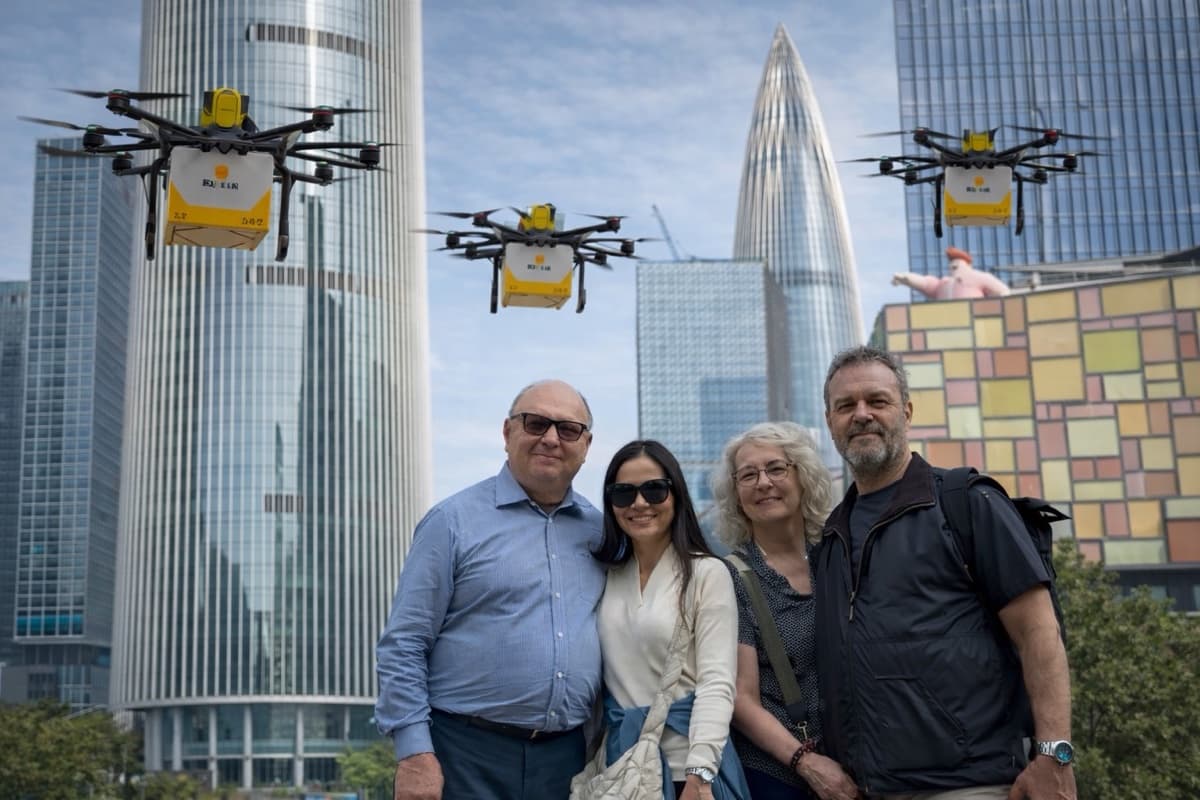
Should You Do a Shenzhen Tech Tour DIY or Guided?
A DIY Shenzhen tech day suits travelers who are comfortable troubleshooting local apps and have schedule flexibility, while a private guided tour suits short visits or first-time mainland China travelers. A self-guided day requires checking each operator's current account, phone-number, service-area, language, and booking rules. Foreign visitors can link eligible international cards directly to Alipay or Weixin Pay, but a working wallet does not guarantee access to every robotaxi or delivery mini-program. A guide bundles those local booking, payment, and navigation steps into one itinerary. This guide compares both paths with itemized costs, hidden friction, and concrete decision criteria so travelers can choose based on their actual trip.
What Can You Actually Do DIY?
Everything that does not require a local connection, reservation, or Chinese-language registration is doable independently:
| Experience | DIY Feasible? | Barrier Level | Notes |
|---|---|---|---|
| Xiaomi and Huawei public displays | ✅ Easy | None | Free entry, some English displays, walk-in |
| Huaqiangbei market | ✅ Easy | Language helpful | Navigable without Chinese, but haggling is harder |
| Shenzhen Science Museum | ✅ Easy | None | Free, some English signage |
| Meituan drone delivery | ⚠️ Hard | Chinese phone + app | App is Chinese-only, requires +86 number |
| Pony.ai robotaxi | ⚠️ Hard | Chinese phone + app | PonyPilot+ requires +86 registration |
| Robot restaurants | ⚠️ Medium | Chinese payment | Ordering kiosks mostly in Chinese |
| Unitree humanoid robots | ⚠️ Medium | Access | Showrooms change locations; guides know current ones |
| Factory/office visits | ❌ Not possible | Invitation only | Requires business connections |
The DIY-friendly tier of Shenzhen tech tourism is the 40% slice covering walk-in venues like Xiaomi and Huawei public displays, Huaqiangbei, and the Shenzhen Science Museum. The high-friction tier covers the remaining 60% of experiences and requires Chinese-specific infrastructure such as a +86 phone number, WeChat Pay, and Mandarin app comprehension. According to La Roja Travel guest experience data from 2024 and 2025, our data shows that PonyPilot+, Meituan, and Unitree showroom WeChat groups remain the largest single barrier for solo Western tourists. First, the robotaxi and drone delivery flows require a Chinese phone number plus a linked Chinese payment account. Second, robot restaurant ordering kiosks default to Mandarin screens with limited English fallback. Additionally, certain humanoid-robot showrooms refresh their access protocols monthly, which is why a local guide retains current entry information that public sources do not.
What Do You Miss Without a Guide?
Beyond the logistical barriers, there are three things a guide provides that are hard to replicate:
1. Context and narrative A robotaxi ride without explanation is a 10-minute taxi ride in a weird car. With a guide, you understand why Pony.ai is scaling toward a 3,000-vehicle fleet (currently 1,400+ Gen-7), how they compare to Waymo, why Shenzhen is the only city with this density of autonomous systems, and what the future implications are. The difference between "cool" and "mind-blown."
2. Efficiency Shenzhen's tech attractions are spread across 20+ km. A guide who knows the timing (which robotaxi pickup points have shortest waits, which drone landing pad has fastest delivery, and when robotics demonstrations are available) can fit 5–6 experiences into 3 hours. DIY travelers typically manage 2–3 in a full day.
3. Access to non-public spaces Certain experiences — innovation showrooms, startup offices, some robot demonstrations — require introductions or reservations that only local operators can arrange. These change monthly as companies open/close their doors.
How Do DIY and Private Guided Tour Costs Compare?
A full day of Shenzhen tech experiences, broken down:
| Expense | DIY Cost | Private Guided Tour (included) |
|---|---|---|
| Metro travel (all day) | ¥20–30 | ✅ Included |
| Robotaxi ride (if possible) | ¥8–18 | ✅ Included |
| Drone delivery order | ¥25–40 | ✅ Included |
| Xiaomi/Huawei public displays (free entry) | ¥0 | ✅ Included |
| Lunch | ¥40–80 | ❌ Not included |
| Robot restaurant meal | ¥60–120 | Varies by tour |
| Chinese SIM card (for apps) | ¥50–100 | Not needed |
| VPN subscription (monthly) | ¥30–60 | Not needed |
| Total per person | ¥233–448 | ¥648–2,500 |
The hidden costs of DIY:
- 2–3 hours researching logistics in advance
- 30–60 minutes setting up Chinese apps (Alipay, Didi, Pony.ai, Meituan)
- Getting lost or visiting closed locations (wastes 1–2 hours)
- Missing context — you see things but do not understand their significance
The math: If you value your vacation time at ¥100/hour, the 4–5 hours of DIY overhead effectively adds ¥400–500 to the "true cost" of a DIY day. This narrows the price gap significantly.
The App Barrier Problem (Specific Details)
Here is what you actually need to set up for a DIY tech day:
| App | Purpose | Chinese Phone Required? | English Available? | Setup Time |
|---|---|---|---|---|
| Alipay | Payment everywhere | No (international version) | Partial | 15 min |
| Communication + mini-programs | No (international) | Yes | 10 min | |
| Didi | Taxi/rideshare | No | Partial | 10 min |
| PonyPilot+ | Robotaxi | Yes (+86 only) | No | Impossible without Chinese number |
| Meituan | Drone delivery + food | Yes (+86 only) | No | Impossible without Chinese number |
| Gaode Maps | Navigation | No | Limited | 5 min |
| Metro app | Subway tickets | No | Yes | 5 min |
The core problem: The two most unique experiences (robotaxi and drone delivery) both require a Chinese phone number. You cannot register with a foreign number, eSIM, or Google Voice number. A physical Chinese SIM solves this, but setup takes 30+ minutes at an airport counter and requires your passport.
When Does DIY Make More Sense?
Be honest: private guided tours are not for everyone. DIY is better if you:
- Live/work in China (already have Chinese apps and phone number set up)
- Speak conversational Mandarin (can read menus, ask for directions, troubleshoot apps)
- Have visited Shenzhen before (know the geography, have the apps, want to explore at your own pace)
- Are a solo tech worker doing research (need to spend 3 hours at Huaqiangbei, not 45 minutes)
- Are on a strict budget (under ¥300/day including food)
If 3+ of these apply to you, DIY is probably the right call. Save your money.
When Is a Guide Worth the Premium?
A private guided tour is better if you:
- Have limited time (1–2 days in Shenzhen, need maximum value per hour)
- Don't speak Chinese (the most common case for Western tourists)
- Want to experience robotaxi and drone delivery (the #1 and #2 things people come to Shenzhen for)
- Are traveling with family or a group (kids, elderly parents — logistics multiply)
- Want to understand the "why" (not just see tech, but understand Shenzhen's role in the global tech ecosystem)
- Value time over money (common for travelers on shorter Asia trips)
Most of our customers fall into this category: English-speaking tourists with 1–2 days in Shenzhen who want to maximize what they see and understand.
How to Choose a Tour Operator (Neutral Criteria)
If you decide a private guided tour is right, here are the factors that actually matter:
| Factor | What to Check | Red Flag |
|---|---|---|
| Tour format | Private booking for your party = personalized | "Up to 20" = bus tour |
| Robotaxi included | Explicitly listed | "Subject to availability" |
| Drone delivery included | Explicitly listed | Not mentioned |
| Guide language | Native English or verified fluent | "English-speaking" with no reviews |
| Flexibility | Can customize stops | Fixed itinerary, no changes |
| Reviews | Platform-verified (GYG, TripAdvisor) | Only website testimonials |
| Price transparency | Per-person, all-inclusive | "From $X" with hidden add-ons |
Operators worth considering (we are biased, but being transparent):
- La Roja Travel — Private tours for your party, robotaxi + drone delivery guaranteed, Nanshan focus
- GetYourGuide suppliers — Multiple operators, standardized reviews, good for comparison
- GoWithGuide — Private guide marketplace, customizable, premium pricing
- Mike's Shenzhen Tours — Highly rated on Reddit, limited availability
Frequently Asked Questions
Is a Shenzhen tech tour worth it for someone who works in tech?
Yes, but for different reasons. Tech workers don't need a guide to explain what a LiDAR sensor is — they benefit from the logistics handling (apps, language, navigation) and access to spaces that require local connections. We regularly host engineers from Google, Meta, and startup founders who want to see Shenzhen's hardware ecosystem without spending half their day on app setup.
Can I do half DIY, half guided?
Absolutely — this is increasingly common. Book a 2.5-hour private guided tour for the robotaxi + drone delivery portion (the hardest to access independently), then explore Huaqiangbei, museums, or any other public venue on your own. Best of both worlds.
How far in advance should I book a private guided tour?
Most Shenzhen tech tours can be booked 24–48 hours in advance. Peak season (October–December, Chinese New Year) may require a week's notice for popular time slots. Solo travelers can usually book same-day if slots are available.
What if I already have a Chinese SIM card?
If you have a working +86 number with data, you can register for PonyPilot+ and Meituan yourself. At that point, your main reason for a private guided tour is efficiency and context rather than access. Consider a shorter tour (2.5 hours) focused on the narrative rather than a full-day experience.
Are there any tech experiences that require a private guided tour no matter what?
Factory visits, private innovation showroom demonstrations, and meetings with startup founders always require advance arrangements through a local operator. These are typically part of full-day or multi-day packages, not the standard half-day tech tour.
What's the best tour length for first-time visitors?
2.5–3 hours covers the core experiences (robotaxi, drone delivery, Chinese EV displays, and hands-on robotics). A full day (6–8 hours) adds Huaqiangbei, robot restaurants, museums, and Ping An observation deck. Most first-timers find 3 hours is enough to be amazed; tech enthusiasts want the full day.
Related Articles
Is a Shenzhen Tech Tour Worth ¥2,000? The Honest Math Most Sites Won't Show You
A private guided Shenzhen tech tour costs ¥648–¥1,700 per person depending on tour and private party size. For that price you get 5-8 tech experiences in one day, a bilingual guide, and access to spots you can't reach alone. Here's the full cost breakdown and honest assessment.
INNO100 Shenzhen Guide: Robots, 3D Printing and Booking
Plan an INNO100 visit at Shenzhen Bay Culture Square: opening hours, transport, robot demonstrations and how to arrange a 3D-printing workshop.
New Tech in Shenzhen: September 2026 Products & Store Guide
Xiaomi SUVs, Huawei foldables, Insta360 X6 and DJI cameras: recent product news, named Shenzhen stores and what to confirm before a visit.