Shenzhen Science and Technology Museum Visit Guide 2026: Tickets, Metro, and What's Inside (Guangming)
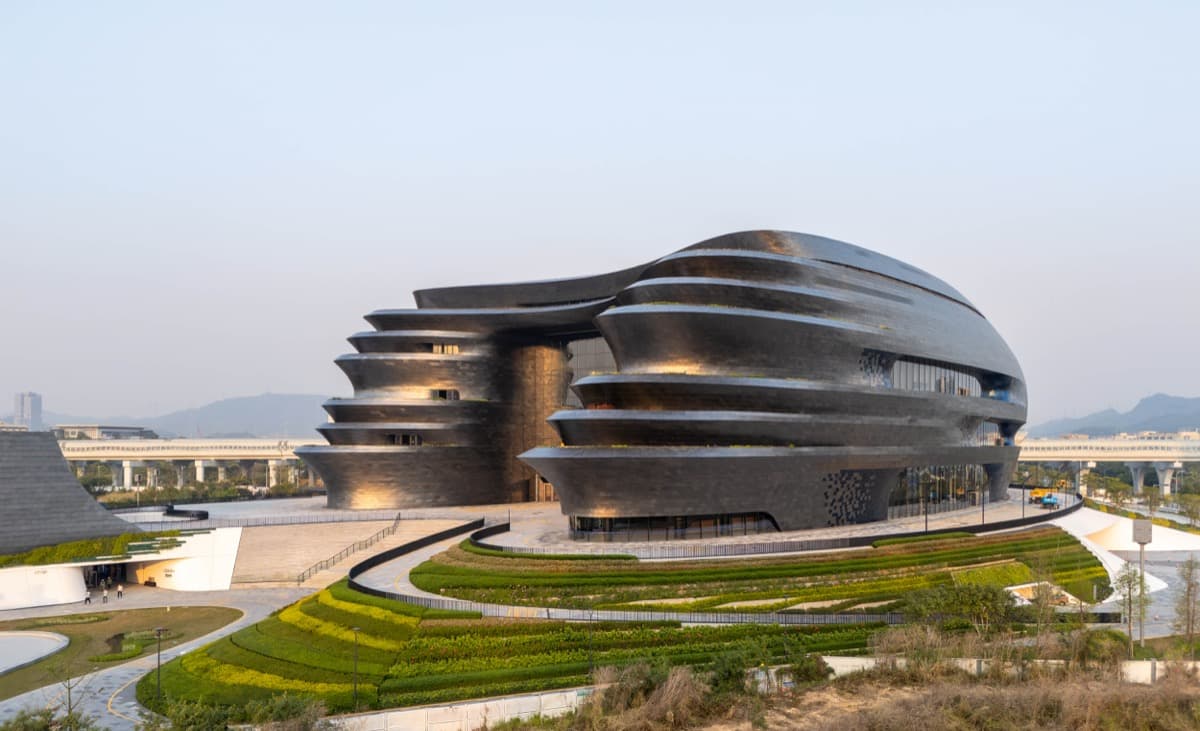
The new Shenzhen Science and Technology Museum in Guangming District is a 128,300-square-meter Zaha Hadid-designed venue that opened to the public in 2025. Tickets run around ¥50 per person and reservations release every night at 8 PM Beijing time. This 2026 guide covers the full address, metro directions from anywhere in Shenzhen, opening hours, the English-booking option via GetYourGuide, and whether it is worth the trip from Nanshan or Hong Kong.
How Do You Visit the Shenzhen Science and Technology Museum?
The new Shenzhen Science and Technology Museum is the 128,300-square-meter Zaha Hadid-designed venue in Guangming District that opened to the public in 2025. The Shenzhen Science and Technology Museum sits on Guanghui Avenue in Guangming District and has quickly become one of the most-photographed museum interiors in China. According to the museum's official reservation platform and our La Roja Travel guest visit logs from 2024 and 2025, our data shows that a typical visit takes 3 to 4 hours minimum and that standard-exhibit tickets cost approximately ¥50 per person. First, the museum requires advance reservation through a slot release every night at 20:00 Beijing time, with popular weekend slots selling out within minutes. Second, the venue stays closed on Mondays and runs 10:00 to 17:00 Tuesday through Friday, and 09:30 to 17:00 on weekends and public holidays. Additionally, the museum is accessible via Metro Line 6 directly to Guangming Station, including from Hong Kong via Futian Port within roughly 90 minutes total.
10 Facts About Shenzhen Science and Technology Museum (Quick Reference)
- Full name: Shenzhen Science and Technology Museum, New Building (深圳科学技术馆新馆) — not to be confused with the older Shenzhen Science Museum in Futian
- Address: No. 8 Guanghui Avenue, Guangming District, Shenzhen (广东省深圳市光明区光辉大道8号)
- Architect: Zaha Hadid Architects
- Floor area: Approximately 128,300 square meters
- Theme: "Digital civilization, innovative future" (数字文明、创新未来) — AI, aerospace, life sciences, future cities, basic science
- Opening hours: Tuesday-Friday 10:00-17:00; weekends and public holidays 09:30-17:00; closed Mondays
- Standard exhibit ticket: ~¥50 per person (visitor-reported; confirm on the official reservation platform for current pricing)
- Metro: Line 6 (Guangming Line) to Guangming Station (光明站), Exit C or D, connected via second-level sky bridge directly to the museum's south and north entrances
- Reservation: Required. Slots release nightly at 20:00 Beijing time; popular weekend slots sell out within minutes
- English booking option: Also listed on GetYourGuide for visitors without a WeChat payment setup
How Do You Get to the Museum?
From central Shenzhen (Futian / Nanshan)
The fastest route is Metro Line 6 to Guangming Station. From Futian CBD, take Line 2 or Line 3 to a Line 6 transfer (commonly via Hongshan Station), then ride Line 6 north to Guangming. Total travel time from Futian CBD or Houhai is approximately 50-60 minutes. Exit C or D connects via a second-level sky bridge directly to the museum entrance — you do not cross any streets.
From Hong Kong
The most common tourist route: high-speed rail from West Kowloon to Futian Station (14 minutes), walk across to the Metro, take Line 4 north to Hongshan Station, transfer to Line 6 north to Guangming Station. Total Futian-to-museum time is about 45 minutes, so the full Hong Kong-to-museum journey is roughly 75-90 minutes each way. This makes a same-day visit possible but uses most of the day.
Alternatively, cross at Futian Port on Line 10, transfer at an intermediate station to Line 6 (check your preferred route on the Shenzhen Metro app as line connections may change).
Driving
The museum has a free parking lot but capacity is limited during weekends. Search "深圳科学技术馆" or "深圳科技馆(新馆)" in Amap or Baidu Maps. Expect ring-road traffic delays on Saturday and Sunday mornings.
Bus
Local buses stop at "光明科技馆站" (Science Museum Station) and "光辉大道站" (Guanghui Avenue Station). Useful if you are already in Guangming District; not a first-choice option from central Shenzhen.
How Do You Reserve Tickets?
Chinese residents with WeChat
The official reservation flow runs through the museum's WeChat official account. Slots release every night at 20:00 Beijing time for dates approximately seven days ahead. Weekend and holiday slots are typically sold out within 60 seconds of release — set an alarm.
Alternative portals: the WeChat official accounts 深圳本地宝 (Shenzhen Bendibao) and 深圳周末去哪玩 both publish up-to-date reservation links and release times.
Foreign tourists without WeChat Pay
Two workable paths:
- GetYourGuide lists the museum's standard admission as an online-bookable ticket. You pay with an international credit card and receive a QR entry code. This is the most friction-free option if you are a short-term visitor without a Chinese payment setup. Search "Shenzhen New Science and Technology Museum" on GetYourGuide.
- Ask a Chinese-speaking contact or guide to book through the official WeChat channel for you. We handle this on custom itineraries for La Roja Travel guests; contact info@larojatravel.com if you want this arranged as part of your Shenzhen visit.
Both paths give you the same ticket and the same entry — you scan your code at the main entrance.
What Is Inside the Museum?
The Shenzhen Science and Technology Museum is organized around 6 permanent exhibition themes spanning multiple floors, plus rotating special exhibitions and a planetarium-style dome cinema. The 6 permanent themes cover Digital Civilization, Aerospace and Space, Life Sciences and Health, Future Cities, Fundamental Science, and Energy and Materials. According to the museum's published exhibition guide and our La Roja Travel guest visit reports from 2024 and 2025, our data shows that visitors typically spend 3 to 4 hours minimum to walk all 6 zones at a normal pace. First, the Digital Civilization zone showcases AI, large language models, and digital twins drawn from current Chinese industry applications. Second, the Future Cities zone connects directly to Shenzhen's low-altitude economy through urban planning simulators and flying-taxi mockups. Additionally, a dome-screen cinema runs separately ticketed science-documentary programming, with most films in Mandarin and select screenings including English subtitles for international visitors.
Permanent exhibition zones (subject to rotation)
- Digital civilization — AI, large language models, digital twins, generative design. Shows current Chinese industry applications rather than pure theory.
- Aerospace and space — Chinese lunar and Mars mission hardware mockups, commercial-space-launch hardware, simulated spacewalks.
- Life sciences and health — genetic engineering, biotech, medical imaging, mental health interactive installations.
- Future cities — urban planning simulators, low-altitude economy (drones, flying taxis) — directly connected to Shenzhen's drone ecosystem
- Fundamental science — physics, chemistry, and mathematics interactive stations aimed at secondary-school visitors
- Energy and materials — new-energy vehicles, battery tech, new materials — relevant context if you are also planning to visit Xiaomi EV Space
Special exhibitions
Rotating programming typically includes one marquee touring exhibition per quarter — past examples include an AI-art retrospective and a humanoid-robotics showcase. The current special exhibition is announced on the museum's official channels and usually requires a separate ticket (¥20-40) on top of standard admission.
Cinema and immersive experiences
A dome-screen cinema runs science-documentary programming with separate ticketing. Check the day-of schedule at the entrance. Most documentaries are in Mandarin; some special screenings include English subtitles.
Is It Worth the Detour?
Honest answer: yes if you are interested in architecture or traveling with children; marginal if you are on a 1-day Shenzhen tech sprint.
| You are... | Worth the detour? | Why |
|---|---|---|
| Traveling with children ages 6-16 | Strongly yes | The interactive-exhibit density and hands-on stations make this one of the best kid-friendly tech visits in China |
| Interested in architecture | Yes | Zaha Hadid's final-era Chinese institutional work; the exterior and atrium alone justify a one-hour visit |
| On a 1-day Shenzhen tech tour from Hong Kong | No | The commute eats 3+ hours; stick to the Nanshan cluster (Xiaomi EV Space, Huawei technology, robotics) |
| In Shenzhen for 2-3 days | Yes on day 2 or 3 | Pair with a Guangming-area lunch; a clean half-day plan |
| A tech professional sourcing hardware | No | The exhibits are science-communication-focused, not industry-B2B. See FAIR plus robot expo instead |
| A general sightseer without kids | Maybe | Depends on tolerance for interactive-exhibit pacing versus straight sightseeing |
Budget 3 hours on site for the standard tour (faster if you skip the special exhibition and cinema). Plus 2 hours round-trip travel from central Shenzhen.
Planning the Day
A sensible single-day plan for visitors with kids:
- Morning: Leave Futian or Nanshan around 9:00. Take Metro Line 6 to Guangming Station (~50-60 min).
- 10:00-13:00: Visit the museum. Start with the permanent AI / aerospace / future cities exhibitions; save the dome cinema for last if you buy a combined ticket.
- 13:00-14:30: Lunch in Guangming. The area around Guanghui Avenue has casual Cantonese and Hunan restaurants within 10 minutes' walk.
- 14:30-16:30: Return to central Shenzhen. Optional: visit Xiaomi EV Space on the return trip if you get off at Hongshan and transfer south to Xiangnei Station.
- Evening: Dinner and the Shenzhen Bay skyline — or watch a drone light show if one is scheduled.
If you do not have kids, skip the museum and spend the day on the Nanshan tech flagship cluster instead.
Pairing with Other Shenzhen Tech Stops
The museum is in Guangming, which is geographically far from the Nanshan tech tourist core. Realistic pairings:
- Same day, same trip: Science Museum (Guangming) + lunch in Guangming + Metro back via Hongshan to Xiaomi EV Space or DJI headquarters in Nanshan
- Different days: Day 1 = Nanshan tech cluster (our Inside Shenzhen Technology tour); Day 2 = Guangming Science Museum + Longgang Robot Valley (both are in the northern arc of Shenzhen)
- From Hong Kong: Single-day focus on the museum + one Nanshan stop; the full Shenzhen Tech Day Tour from Hong Kong typically skips Guangming because the Nanshan density delivers more per hour
Why Shenzhen Built a Second, Bigger Science Museum
The original Shenzhen Science Museum (深圳科学馆) in Futian, near Children's Park Metro, opened in 1988 and is now showing its age. It remains open (free entry) but covers pre-2000 scientific communication.
The Guangming new building reflects Shenzhen's 14th Five-Year Plan positioning as a center for basic research and tech-policy narrative-setting. Guangming District itself was designated as a "Science City" (光明科学城) with dedicated national-lab investment; placing the museum there anchors the district's public-facing identity. The Zaha Hadid commission was awarded before the firm's founder's death in 2016 and completed by the Hadid studio as one of their final Chinese institutional works.
For the visitor, the practical takeaway: the new building has the scale, the interactive budget, and the architecture. The old Futian museum is a 30-minute free curiosity stop if you are already in Futian.
Experience Shenzhen's Tech Scene on a Private Guided Tour
Our Inside Shenzhen Technology private tour covers the Nanshan flagship cluster (Pony.ai robotaxi, Meituan drone delivery, Xiaomi EV Space, and Unitree robotics) in 2.5 hours for ¥338/person in an online booking of 6 or ¥648/person for 1–2 people. Larger parties can contact us directly. Booking direct with us skips the 10-20% marketplace commission.
For visitors specifically wanting to include the Science and Technology Museum as a family half-day, we can arrange a custom itinerary with English-speaking guide + pre-booked reservations. Contact info@larojatravel.com or WhatsApp +86 131 2895 8901.
Frequently Asked Questions
What is the difference between the Shenzhen Science Museum and the Shenzhen Science and Technology Museum?
Shenzhen Science Museum (深圳科学馆) is the older 1988 building in Futian, near Children's Park Metro, free entry, smaller and dated. Shenzhen Science and Technology Museum (深圳科学技术馆) is the new 2025 Zaha Hadid building in Guangming District, paid admission, much larger. When locals say "the new science museum," they mean the Guangming one.
Can foreign tourists book tickets without WeChat?
Yes, via GetYourGuide. Search "Shenzhen New Science and Technology Museum" for standard admission with international-card payment. Some advanced special exhibitions may only sell through the official WeChat channel — if you need those, ask a Chinese-speaking contact or your tour operator to book.
Are there English-language exhibits or audio guides?
Most permanent exhibits have bilingual Chinese-English signage. Audio-guide availability in English varies by exhibition — ask at the information desk. For a fully English-guided experience, a bilingual local guide is more reliable.
How long should I plan to spend inside?
Three hours for the permanent exhibitions at a steady pace. Add 60-90 minutes if you also want the dome cinema and one special exhibition. Families with engaged children routinely spend 4-5 hours.
Are strollers and wheelchairs accommodated?
Yes. The building is fully accessible — wide corridors, elevators between all floors, and the sky-bridge connection from the metro is step-free.
Is food and drink available inside?
Yes — there is a café and a small food court on site, typical museum-cafeteria quality. For a better meal, walk 10 minutes into the surrounding Guangming neighborhood; the area has local Cantonese and Hunan restaurants at normal Shenzhen non-tourist prices.
Is the Line 6 ride long and boring?
Line 6 runs above-ground for most of the Guangming stretch and has good views of the district's "Science City" development. The ride is pleasant compared to typical Shenzhen underground metros. Bring a book or plan to doze — it is 50-60 minutes from Futian CBD.
Can I combine the museum with Longgang Robot Valley in one day?
Technically yes, but tight. Both are in the northern arc of Shenzhen — Guangming is northwest, Longgang's Robot Valley (Bantian) is east. Crossing between them takes 60-75 minutes via metro and involves one or two transfers. Realistic one-day plan: museum in the morning, lunch, Robot Valley in the afternoon (with pre-booked WeChat reservation). Both close in the 17:00-18:00 range so you cannot flex much.
What about the "Children's Discovery Museum" I keep seeing in search results?
That is a separate venue (深圳儿童探索馆) in Futian focused on ages 3-10, totally distinct from the new Science and Technology Museum. If you have preschool-age children, the Children's Discovery Museum may actually be a better fit than the larger technical exhibitions at the Guangming venue.
Related Posts
- 5 Must-See Tech Experiences in Shenzhen — the year-round core itinerary
- Visiting Shenzhen's Tech Giants — DJI, Huawei, Unitree, Xiaomi, NIO in Nanshan
- Shenzhen Robot Valley Longgang Guide — the companion northern-arc destination
- Xiaomi EV Space Visit Guide — transferable on the Hongshan Metro route back
- Shenzhen Metro Guide for Tourists 2026 — how the metro map actually works
- Shenzhen From Hong Kong Day Guide — same-day logistics
Related Articles
Shenzhen Tech Tour with Kids: A Family Guide (2026)
Plan a Shenzhen tech day with children: adult-accompanied robotaxi rides, tour formats and prices, drone delivery, family pacing and the Hong Kong border crossing.
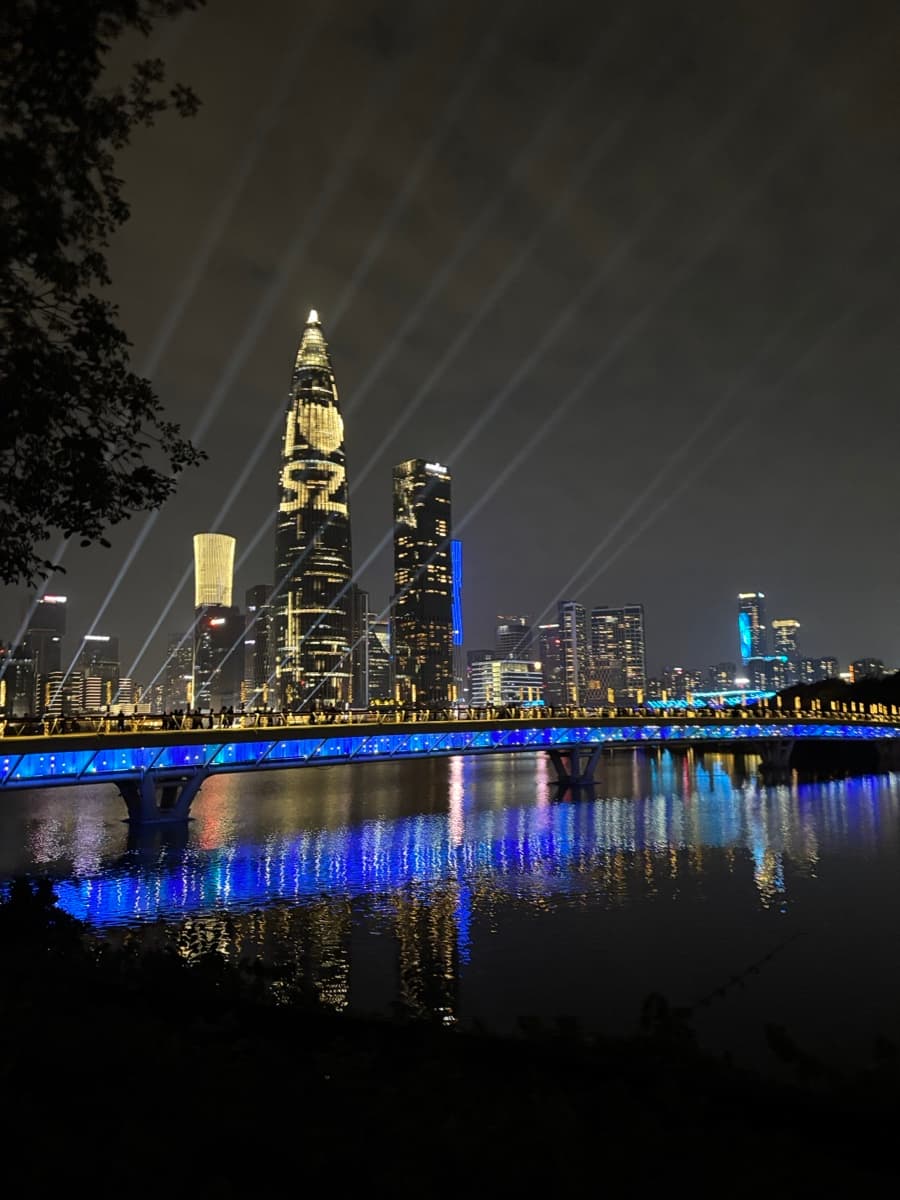
Shenzhen Tech Tour Itinerary 2026: Day-by-Day Plans for 2, 3, 5 & 7-Day Trips
Suggested 2, 3, 5 and 7-day Shenzhen tech trip outlines: Nanshan robotaxi and drone experiences, Huaqiangbei, optional museums and regional travel, with private and Small Group tour options.
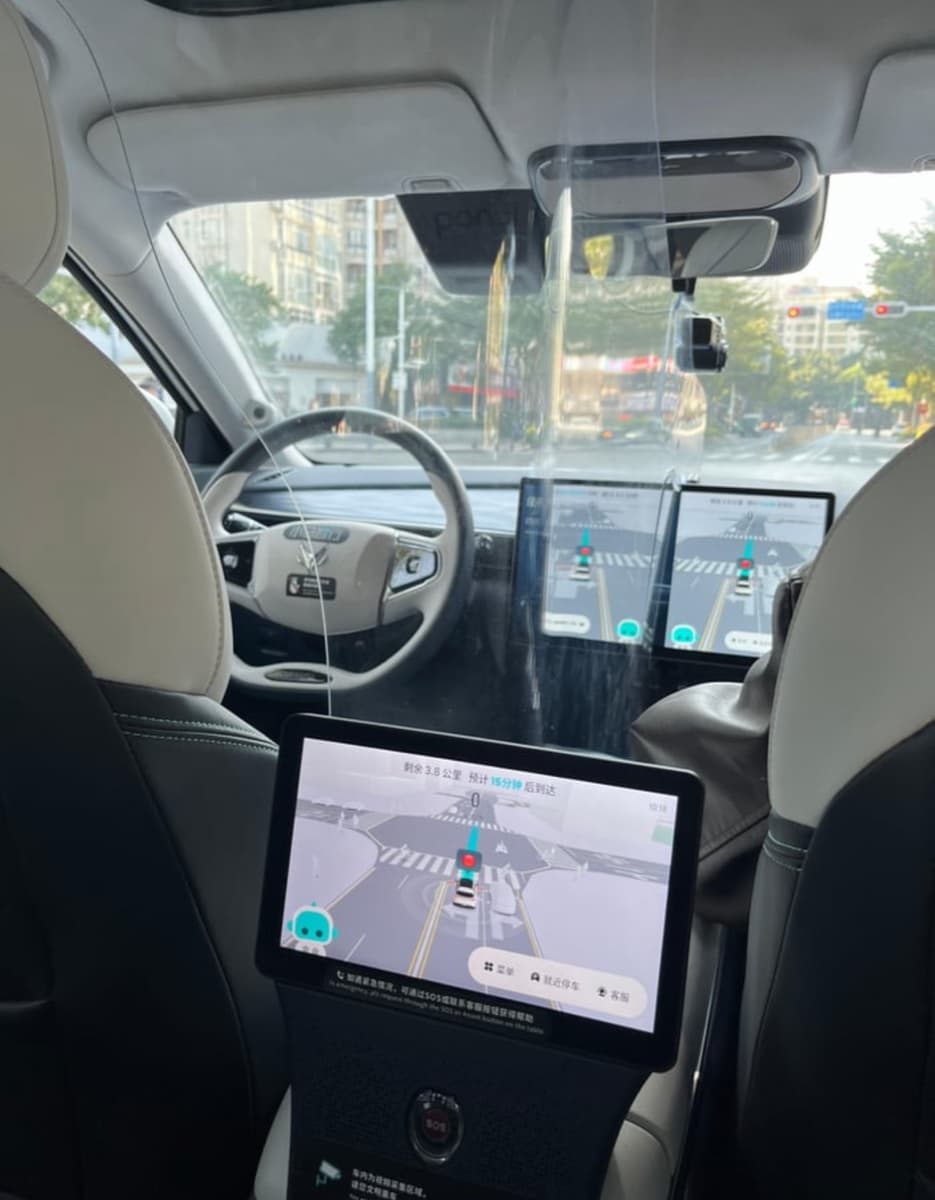
Pony.ai Robotaxi Shenzhen 2026: Complete Guide for Foreign Tourists
Pony.ai operates 1,400+ Gen-7 robotaxis across China and is the dominant Level 4 operator in Shenzhen — the first city to reach unit economics breakeven. This guide covers how Pony.ai works, the 2026-03 WeChat mini-program path, real costs, Gen-7 vehicle specs, and how to ride one as a foreign tourist.