Hong Kong to Shenzhen: Trains, Visas & Day Trips (2026)
Choose your train or border crossing from Hong Kong to Shenzhen, check visa-free entry, and plan a realistic day trip with time to return.
How Do You Get from Hong Kong to Shenzhen?
For a central Shenzhen day trip, compare the high-speed train from Hong Kong West Kowloon to Futian with the MTR East Rail crossings at Lo Wu and Lok Ma Chau. Choose your entry route after checking your passport's mainland China entry requirements. The short train ride does not include station checks, immigration or travel to your first stop.
Checked on 7 September 2026. Arrange your entry permission, transport and sightseeing together; the right crossing depends on all three.
| Your plan | Route to compare | Check first |
|---|---|---|
| Futian, Huaqiangbei or an onward metro journey to Nanshan | High-speed rail: West Kowloon → Futian | Entry permission, reserved train and time for checks before boarding |
| Luohu shopping or eastern central Shenzhen | East Rail → Lo Wu; walk through the Luohu crossing | Border hours and whether your entry documents fit this port |
| Enter through Futian Checkpoint | East Rail → Lok Ma Chau; walk through the crossing | Futian Checkpoint is a different place from Futian high-speed railway station |
| Arrive at Hong Kong airport and continue directly to Shekou | An eligible SkyPier air-to-sea transfer | Airline, baggage, ferry and transfer conditions |
| Luggage or a particular pickup address | Authorized cross-border coach or private transfer | Exact pickup, border, final drop-off, price and documents |
Want help from the Hong Kong departure?
Our From Hong Kong: Shenzhen Technology Day Tour is an 8-hour private tour meeting at West Kowloon Railway Station, B1 drop off. Round-trip train/ferry tickets and immigration assistance are included. Meals and visa fees are separate. See the itinerary and live price →
Do You Need a Visa to Visit Shenzhen from Hong Kong?
It depends on your passport and entry status. Permission to visit Hong Kong does not by itself give you permission to enter mainland China. Check every traveler's documents, including children's, before booking transport.
| Entry basis | Fits a Hong Kong → Shenzhen → Hong Kong day trip? | What to verify |
|---|---|---|
| Valid mainland visa or applicable travel/residence document | Yes, if its conditions cover the trip | Validity, remaining entries, purpose and permitted stay |
| Unilateral or mutual visa exemption | Yes, for eligible passport holders and visits | Nationality, passport type, purpose, stay limit and policy validity |
| Shenzhen SEZ port visa | A possible Shenzhen-only option for eligible applicants | Issuing port, eligibility, documents, fee and office hours before choosing the crossing |
| 240-hour visa-free transit | No for a simple return to Hong Kong | Requires onward travel to a different third country or region and other qualifying conditions |
The NIA's unilateral visa-exemption list, dated 17 February 2026, includes ordinary passports from countries such as the UK, Canada and Australia for qualifying visits of up to 30 days. Mutual agreements are a separate route: consult the official policy index if your nationality is absent. Confirm current validity with the relevant Chinese embassy or consulate.
Can you get a Shenzhen SEZ visa at West Kowloon?
Do not book the West Kowloon train expecting to buy a Shenzhen SEZ visa in its immigration hall. Shenzhen's port guidance describes the Shenzhen-only five-day visa. Its 2025 review and 2026 work plan identifies port-visa services at Luohu, Huanggang, Shenzhen airport and Shekou. West Kowloon is discussed separately as a 240-hour transit entry port.
These are different permissions. If you need a port visa, use the NIA issuing-office contacts to confirm eligibility, route, documents and current fees. There is no universal fee or guaranteed approval for every passport.
Why does the 240-hour rule exclude a Hong Kong round trip?
The NIA's transit rules, updated 20 August 2026, require a confirmed onward ticket to a third country or region. Hong Kong → Shenzhen → Hong Kong returns to the same place. Hong Kong → mainland China → Singapore may fit only if the nationality, port, documents and other transit conditions also qualify.
Taking the High-Speed Train from West Kowloon
Choose Futian for central Futian and onward local travel, or Shenzhen North / Shenzhenbei if that better fits your destination or connecting train. Check actual services and fares in the MTR journey planner.
The often-quoted ride of around 15 minutes to Futian is time on the train. Also allow time to reach West Kowloon, complete checks, board, exit Futian station and reach your first activity.
According to MTR's departure instructions:
- Bring the original identification document used to buy the ticket. Use the staff assistance counter if needed.
- Complete real-name/ticket checks, then security. MTR states that real-name checking and ticket verification cease 30 minutes before departure.
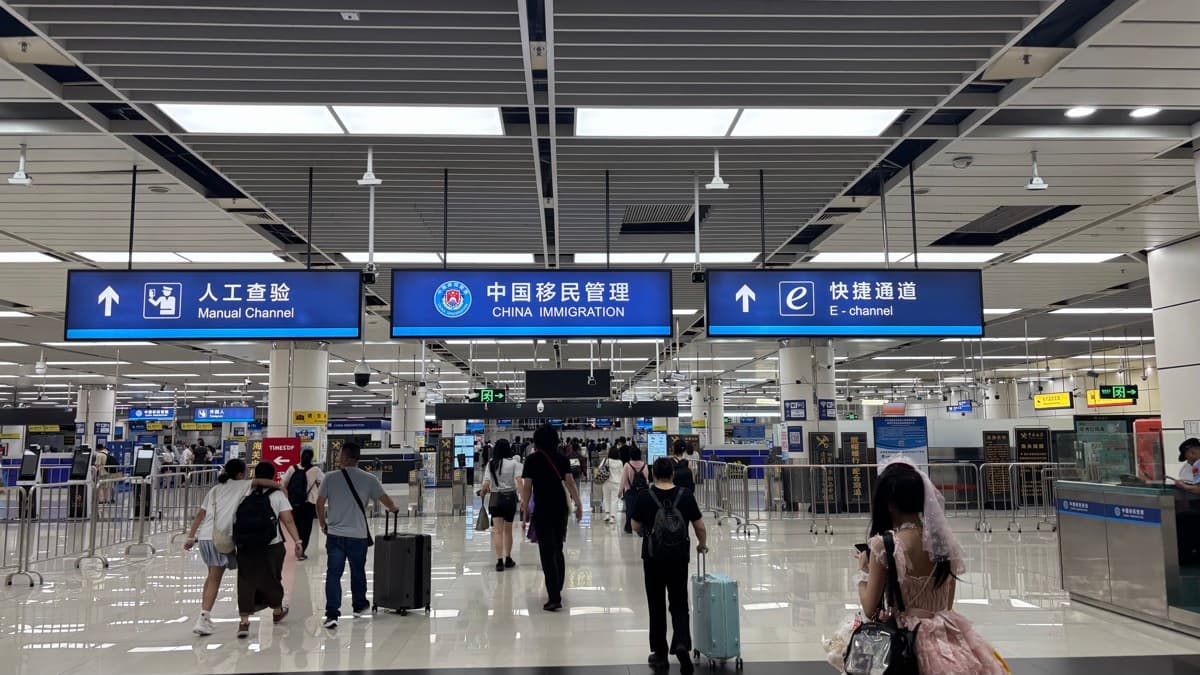
- Complete both Hong Kong exit and mainland China entry immigration at West Kowloon before boarding. You do not wait until Futian to enter mainland China.
- Go to the boarding gate. MTR says gates close 5 minutes before departure.
MTR describes the procedures as normally taking around 30–45 minutes, with extra time needed for passport holders, manual counters and busy periods. Treat that as guidance, not a maximum wait. Read the latest instructions when booking and leave a generous buffer.
Taking East Rail to Lo Wu or Lok Ma Chau
MTR confirms that Lo Wu connects to Luohu and Lok Ma Chau connects to Futian Checkpoint. Take the correct train branch, complete Hong Kong exit checks, walk through the crossing and complete mainland entry checks.
Continue from Shenzhen Metro Luohu or Futian Checkpoint / 福田口岸. Check the current Metro map and save your destination in Chinese. Futian Checkpoint is not interchangeable with Futian / 福田, the high-speed railway station.
Compare the whole journey from your hotel to your first stop. Check current MTR fares and border operating hours; one old fare cannot describe every Hong Kong starting point.
Can You Take a Ferry from Hong Kong Airport to Shekou?
SkyPier is a transfer service with specific conditions. Hong Kong International Airport states that it serves transfer passengers and is not available to passengers originating in Hong Kong.
If arriving by air and continuing directly to Shekou, check airline, baggage, ferry and connection requirements before leaving the transfer area. If you have already entered Hong Kong or are departing a city hotel, plan a city departure route. An airport transfer ferry is not a general downtown public ferry.
What Should You Prepare Before Crossing?
- Documents: original passports or applicable travel documents, your visa/exemption basis, and return/onward arrangements.
- Payments: set up Alipay or Weixin Pay with an eligible international card where supported, plus an alternative and some RMB. Follow our payment guide.
- Mobile data: confirm mainland coverage with your roaming, SIM or eSIM provider. Data access does not guarantee an app will accept your account or payment.
- Saved details: keep your meeting point, Chinese destination names, tickets and return plan accessible offline.
- Return margin: allow for local travel, border processing and boarding. A next-day flight also needs a separate airport travel buffer.
A Realistic Shenzhen Day-Trip Plan
Pick a main interest and one nearby second area. This is a planning outline; adjust it to your train, entry processing and bookings.
| Part of the day | Focus | Planning detail |
|---|---|---|
| Morning | Travel and reach your first area | Keep the first activity flexible until arrival time is clear |
| Main visit | Nanshan technology or Huaqiangbei shopping | Confirm activity access; a corporate headquarters address does not establish public admission |
| Lunch and afternoon | A meal and a nearby second stop | Leave time for local travel, queues and rest |
| Return | Reach your train or chosen crossing | Count backward from boarding/checkpoint deadlines, not just departure |
For technology, start with INNO100, Robotaxi and drone delivery. For electronics shopping, use the Huaqiangbei guide. Workshops, meals and exhibitions need separate arrangements unless expressly included in your booking.
Which Tour Fits Your Departure Point?
Starting in Hong Kong: the 8-hour private Hong Kong departure includes round-trip train/ferry tickets, a guide, immigration assistance and Shenzhen transport. Meals and visa fees are not included. Immigration decisions remain with the authorities.
Arranging your own crossing: Inside Shenzhen Technology meets in Shenzhen and covers the core route in 2.5 hours, as Private or a scheduled shared Small Group departure. Your Hong Kong crossing and train tickets are separate.
Use the live booking page for prices, dates and meeting details. Agree special transport or extra activities before relying on them.
Frequently Asked Questions
Can I visit Shenzhen from Hong Kong without a visa?
Yes, if your passport and visit qualify for an applicable exemption. Check nationality, passport type, purpose, stay limit and current validity. A Hong Kong round trip does not qualify for 240-hour transit. If you need a visa, arrange an appropriate visa or confirm eligibility at a suitable port-visa office before choosing transport.
Is the Hong Kong to Shenzhen journey only 15 minutes?
That describes a short high-speed train leg to Futian. Your full journey also includes travel to West Kowloon, checks, immigration, boarding and onward travel in Shenzhen. Follow MTR deadlines and allow extra time for passport/manual counters.
Are Futian Station and Futian Checkpoint the same place?
No. Futian Station serves high-speed trains. Futian Checkpoint is the border crossing connected to MTR Lok Ma Chau and Shenzhen Metro Futian Checkpoint. Use the exact name when buying tickets or meeting a guide.
Where do I clear mainland immigration on the high-speed train route?
At Hong Kong West Kowloon before boarding, together with the Hong Kong departure formalities. Do not plan to obtain an SEZ port visa after arriving at Futian Station.
Is a guide required for a day trip?
No. You can organize your own documents, transport and sightseeing. A guide can assist with tickets, directions, language and activity logistics. Choose the Hong Kong departure for cross-border help, or a Shenzhen meeting point if you arrange your own crossing.
Related Articles
China's 240-Hour Transit Visa-Free Policy (2026): Who Qualifies & How to Use It
China's 240-hour transit visa-free policy lets eligible travelers stay up to 10 days with a passport and onward ticket to a third country or region. Here's exactly who qualifies in 2026.
Train vs Ferry vs Private Car: Hong Kong to Shenzhen (2026 Comparison)
Compare high-speed rail, East Rail, eligible airport ferries and private road transfers from Hong Kong to Shenzhen, including border and booking conditions.
Shenzhen Day Tour with Immigration Escort from West Kowloon (2026)
What La Roja immigration assistance covers, where to meet at West Kowloon, what documents you need and which costs are separate.