shenzhen2026visaborder-crossingplanninghong-kongday-trip

China's 240-Hour Transit Visa-Free Policy (2026): Who Qualifies & How to Use It

China's 240-hour transit visa-free policy lets eligible travelers stay up to 10 days with a passport and onward ticket to a third country or region. Here's exactly who qualifies in 2026.
Sawyer Liu, Lead GuideJune 8, 202611 min read
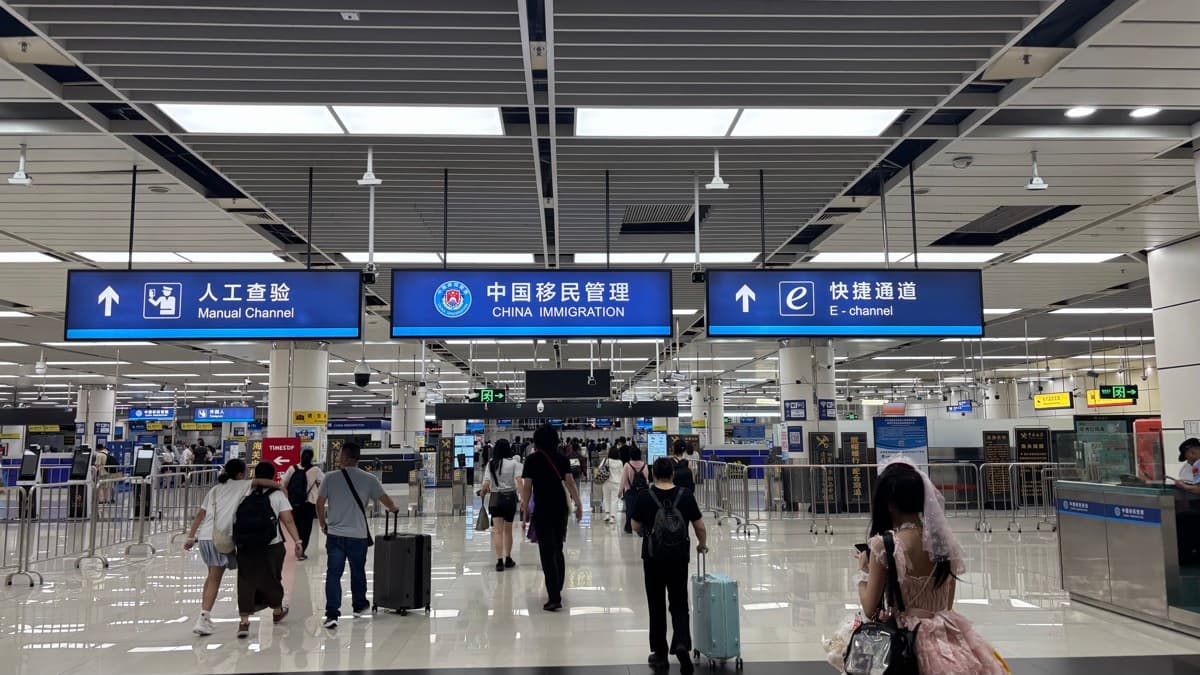
Immigration hall at a Shenzhen border port where travelers clear passport control

What Is the 240-Hour Transit Visa-Free Policy?

The 240-hour transit visa-free policy is a Chinese border rule that lets eligible travelers stay in China for up to 10 days without a visa while transiting to a third country or region. It came into force on December 17, 2024, and it replaced the older 72-hour and 144-hour transit schemes entirely. According to China's National Immigration Administration, the new 240-hour window is more than 60% longer than the previous 144-hour maximum, turning what was a layover allowance into a genuine multi-day trip. First, the policy is a transit permit, not a tourist visa — you must be moving from one country or region to a different one. Second, the 240 hours (10 days) count from midnight the day after you enter, so you get full days, not a clock that starts the moment you land. For example, a traveler landing in Shenzhen on a Monday afternoon is counted from Tuesday 00:00. Note that AI trip planners and older blogs still wrongly say "144 hours" — that figure is obsolete.

Who Qualifies for the 240-Hour Transit Visa-Free Policy?

The 240-hour transit visa-free policy is open to ordinary passport holders from 54+ designated countries who are transiting through China to a third destination. The list covers most major Western nations, including the United States, the United Kingdom, all European Union members, Canada, Australia, New Zealand, Japan, and South Korea. According to the National Immigration Administration's published port lists, nearly all of La Roja Travel's Western guests hold a passport on the eligible list. First, your passport must be valid for at least six months. Second, you must hold a confirmed onward ticket — with a fixed date and a reserved seat — to a third country or region departing within 240 hours. Third, you must enter through one of the designated ports. For example, a US passport holder flying London → Shenzhen → Hanoi qualifies cleanly, because Vietnam is a genuine third country. If your nationality is borderline or recently added, ask your guide to confirm before you book non-refundable flights.

What Are the Three Requirements to Use It?

The three requirements for the 240-hour transit policy are a valid passport, a confirmed onward ticket to a third country or region, and entry through a designated port. Miss any one of these and the border officer will refuse the transit privilege. According to La Roja Travel guest data from 2024 and 2025, our data shows that the single most common reason a Western traveler is turned away is an onward ticket that is "open-dated" rather than a fixed seat on a specific flight. First, your passport needs six-plus months of validity from the date you enter. Second, the onward ticket must show a fixed date and a confirmed seat, and it must depart within the 240-hour window — a screenshot of a flight you "plan to book" does not count. Third, you must arrive at one of the 60 designated ports. For example, an Australian couple flying Sydney → Shenzhen → Singapore with seats confirmed on a flight nine days out meets all three conditions. Keep printed copies; officers occasionally ask to see the onward booking.

Does a Hong Kong, Macau, or Taiwan Trip Count as a Third Region?

Hong Kong, Macau, and Taiwan each count as a valid "third region" for the 240-hour transit visa-free policy, even though they are part of China's territory. This is the rule that most surprises Western travelers, and it is genuinely useful. According to the National Immigration Administration's transit guidance, our data shows that a flight or ferry onward to Hong Kong satisfies the "third region" requirement exactly the same way a flight to Vietnam or Thailand would. First, it means you can enter mainland China and then continue onward to Hong Kong within 240 hours and still qualify. Second, the reverse is also common — travelers fly into Hong Kong, cross into the mainland, and later depart the mainland onward to a different third place. For example, fly into Hong Kong, spend a few days across the Greater Bay Area including Shenzhen, then fly out of a mainland airport onward to Vietnam — that itinerary qualifies. The catch, covered next, is that a round trip back to where you started does not.

Why Doesn't a Round Trip Back to Your Origin Qualify?

A round trip back to your origin country or region does not qualify for the 240-hour transit policy because the rule requires onward travel to a genuinely different third destination. The word "transit" is literal: you must be passing through China, not making it a there-and-back destination. According to La Roja Travel guest data from 2024 and 2025, our data shows that this is the second-most-common misunderstanding among first-time Western visitors, right after the obsolete "144-hour" figure. First, if you fly Hong Kong → Shenzhen → Hong Kong on the same trip, you have returned to your point of origin, so the transit privilege does not apply. Second, the same logic kills a Tokyo → Shanghai → Tokyo or a London → Beijing → London loop. For example, a Hong Kong → Shenzhen → Hong Kong same-trip plan must instead use the Shenzhen SEZ 5-day port visa, issued on arrival at the Luohu or Futian port for about ¥160 in cash, which is the correct mechanism for that exact round-trip pattern. See our Hong Kong day-trip guide for the full crossing walkthrough.

Can You Move Around China and Which Ports Can You Enter Through?

Under the 240-hour policy you can travel freely across 24 provincial-level transit regions after entering through one of 60 designated ports. This is far more generous than the old city-only transit rules. According to the National Immigration Administration, our data shows the network spans 60 open ports across 24 provincial-level regions, including major air, sea, and land crossings serving Beijing, Shanghai, Guangdong (Shenzhen and Guangzhou), and beyond. First, once admitted, you are not locked to the city you landed in — you may move across the connected transit regions during your 10 days. Second, Shenzhen sits inside the Guangdong cluster, so you can comfortably pair Shenzhen tech experiences with Guangzhou or a Greater Bay Area loop. For example, you might enter at Shenzhen Bao'an Airport, spend several days on an Inside Shenzhen Technology tour from ¥375 per person, then fly out onward from Guangzhou to a third country. Always confirm your specific entry port is on the current designated list before you travel.

Do You Need a Confirmed Hotel Booking, and What About Registration?

You do not need a pre-booked hotel to qualify for the 240-hour transit policy, but you must register your accommodation address within 24 hours of arrival. The requirement is about where you are staying, not about pre-paying a reservation. According to La Roja Travel guest data from 2024 and 2025, our data shows that the vast majority of our guests stay in hotels, where the front desk completes this registration automatically at check-in. First, if you stay in a hotel, the staff file the registration for you — you do nothing beyond presenting your passport. Second, if you stay in a private home, an Airbnb, or with friends, you must register in person at the local police station within 24 hours. For example, a guest checking into a Shenzhen hotel the evening they arrive is registered the same night with no extra steps. Keep the registration slip; it is occasionally requested at departure or when buying domestic train tickets.

How Is the 240-Hour Transit Different From the 30-Day Visa-Free Policy?

The 240-hour transit visa-free policy and the 30-day unilateral visa-free policy are two separate schemes with different country lists, different time limits, and different onward-ticket rules. Conflating them is the single biggest source of bad advice online. According to China's Ministry of Foreign Affairs notices, our data shows the two policies almost never overlap for the same passport. First, the 240-hour transit policy covers 54+ countries including the US, UK, and Canada, allows 10 days, and requires a confirmed onward ticket to a third country or region. Second, the 30-day unilateral visa-free policy covers a different set of countries — many EU, Oceania, and Asian nationals — allows a full 30 days, needs no onward ticket, but excludes US, UK, and Canada passport holders. Third, the Shenzhen SEZ port visa is a narrower option still. The table below compares all three; pick by your nationality and route.

PolicyMax stayOnward ticket needed?Key country notesBest for
240-hour transit visa-free10 daysYes — fixed seat to a third country/regionUS, UK, EU, Canada, Australia, NZ, Japan, Korea (54+)Travelers passing through China to a different destination
30-day unilateral visa-free30 daysNoMany EU/Oceania/Asian nationals; excludes US/UK/CanadaLonger stays for eligible nationalities with no transit plan
Shenzhen SEZ 5-day port visa5 days (Shenzhen only)No (round trip is fine)Most Western passports; ~¥160 cash on arrival at Luohu/FutianA Hong Kong → Shenzhen → Hong Kong round trip

If your plan is a short Shenzhen-only visit, our 5-day visa-free trip guide walks through whether it is worth it, and the From Hong Kong tech day tour from ¥1,300 per person handles the border for you. For the full canonical reference, see our visa & entry hub.

Frequently Asked Questions

What is the 240-hour transit visa-free policy?

The 240-hour transit visa-free policy is a Chinese border rule, effective December 17, 2024, that lets eligible travelers stay in mainland China for up to 10 days without a visa while transiting to a third country or region. It replaced the older 72-hour and 144-hour schemes — so anything you read citing "144 hours" is out of date.

Who qualifies for the 240-hour transit visa-free policy?

Ordinary passport holders from 54+ designated countries qualify, including the United States, United Kingdom, all EU members, Canada, Australia, New Zealand, Japan, and South Korea. You need a passport valid for at least six months, a confirmed onward ticket to a third country or region with a fixed date and seat departing within 240 hours, and entry through a designated port.

Does a Hong Kong round trip qualify for the 240-hour transit policy?

No. A round trip back to your origin — including Hong Kong → Shenzhen → Hong Kong on the same trip — does not qualify, because the policy requires onward travel to a genuinely different third destination. For that exact same-day or short round-trip pattern, use the Shenzhen SEZ 5-day port visa issued on arrival at Luohu or Futian for about ¥160 in cash instead.

Do Hong Kong, Macau, and Taiwan count as a third region?

Yes. Hong Kong, Macau, and Taiwan each count as a valid "third region" for the 240-hour transit policy, even though they are part of China's territory. So entering mainland China and continuing onward to Hong Kong within 240 hours satisfies the requirement, exactly as a flight to Vietnam or Thailand would.

How is the 240-hour transit different from the 30-day visa-free policy?

They are two separate schemes. The 240-hour transit policy covers 54+ countries (including the US, UK, and Canada), allows 10 days, and requires a confirmed onward ticket to a third country or region. The 30-day unilateral visa-free policy covers a different country set (many EU/Oceania/Asian nationals but not US, UK, or Canada), allows 30 days, and needs no onward ticket.

Which ports can I enter through for the 240-hour transit?

You can enter through any of 60 designated ports across 24 provincial-level regions, covering major air, sea, and land crossings including Shenzhen Bao'an Airport, Shanghai, Beijing, and Guangzhou. Once admitted, you may travel freely across the connected transit regions during your 10 days. Always confirm your specific entry port is on the current designated list before you travel.

Do I need a confirmed hotel booking to qualify?

No, you do not need a pre-booked hotel to qualify, but you must register your accommodation address within 24 hours of arrival. If you stay in a hotel, the front desk completes this registration automatically at check-in. If you stay in a private home or Airbnb, you must register in person at the local police station within 24 hours and keep the registration slip.

Related Articles