What is a Robotaxi? Riding Self-Driving Cars in Shenzhen
A complete guide to robotaxis in Shenzhen: how they work, where to find them, what it costs, and what it's really like to ride a fully autonomous vehicle with no human driver.
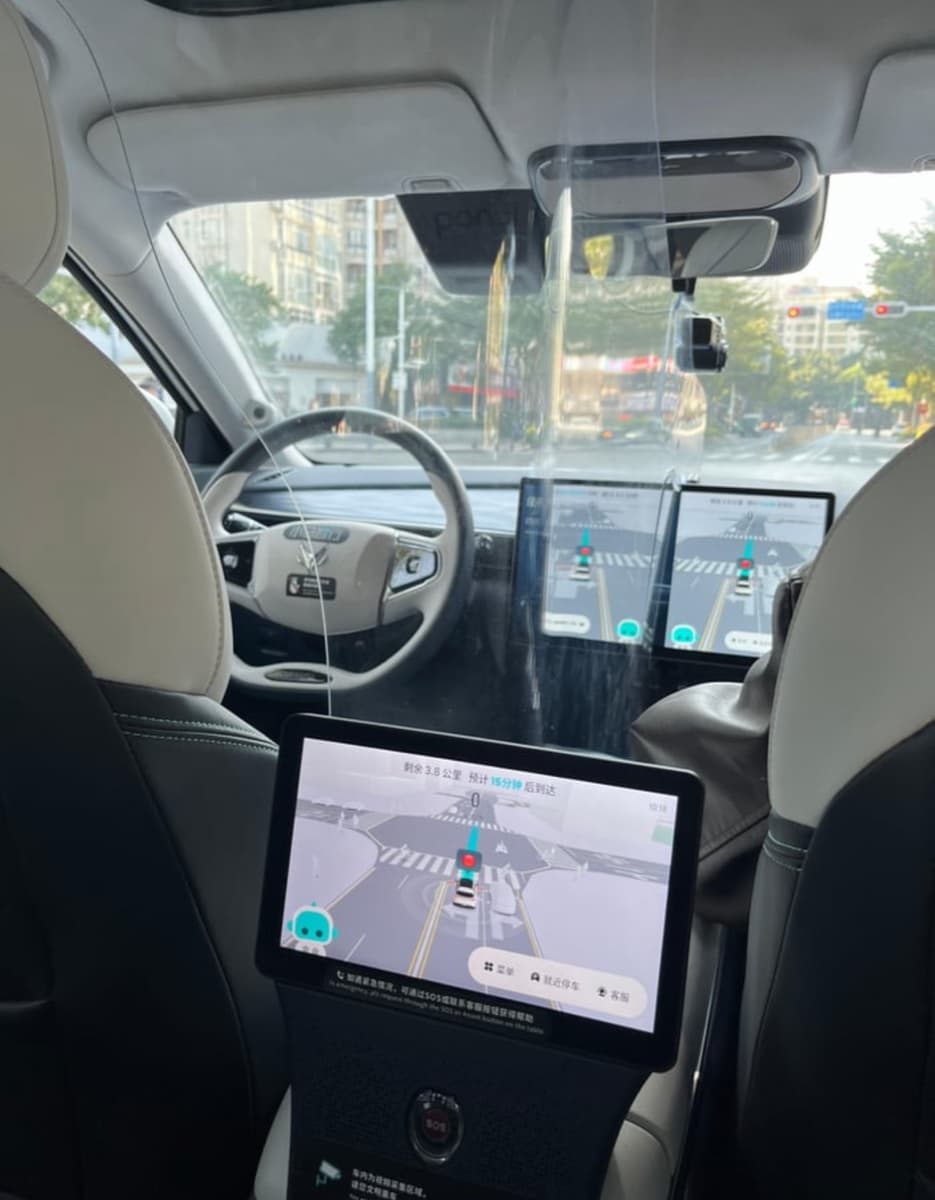
What Exactly is a Robotaxi?
A robotaxi is a fully autonomous taxi vehicle that drives passengers across city streets without a human behind the wheel. Shenzhen's leading robotaxi operator is Pony.ai, which has run paid commercial rides since 2023 and serves over 100,000 trips per month across Nanshan District as of 2026. According to Pony.ai's public safety reporting and our La Roja Travel guide observations across hundreds of guest rides, every Pony.ai trip in central Nanshan operates under SAE Level 4 autonomy without driver intervention. First, the vehicle handles lane changes, unprotected left turns, and pedestrian yields entirely through onboard AI. Second, our data shows that first-time foreign passengers typically describe the ride as smoother than a traditional taxi within 5 minutes. Additionally, Pony.ai's commercial license covers 7AM–10PM operation across the Nanshan and Qianhai zones, distinct from research-only autonomy programs in many Western cities.
A Shenzhen robotaxi is a Level 4 autonomous vehicle, meaning the system drives without any required human supervision inside the cabin or in a remote operations seat. Tesla's Full Self-Driving remains a Level 2 driver-assist system requiring a human ready to take the wheel, while Shenzhen's commercial Pony.ai fleet handles every routine driving decision independently. According to SAE International's autonomy taxonomy and Shenzhen Municipal Bureau of Transport licensing rules, Level 4 vehicles can safely operate within a geofenced operating domain without a human fallback. First, the AI system manages lane changes, unprotected left turns, and double-parked delivery truck navigation autonomously. Second, our tour data shows the empty driver seat remains the single most photographed detail across thousands of La Roja guest rides. Additionally, Shenzhen's commercial geofence currently spans roughly 60 km² across Nanshan and Qianhai districts as of 2026.
Where Can You Ride a Robotaxi in Shenzhen?
Pony.ai robotaxis currently operate across a 60 km² zone in Nanshan and Qianhai districts. The coverage area includes:
- Shenzhen Bay waterfront area
- Talent Park and surrounding tech campuses
- OCT Harbour shopping district
- Qianhai Free Trade Zone
- Major roads connecting these areas
The service runs 7 days a week from 7:00 AM to 10:00 PM. During peak hours (8-10 AM and 5-7 PM), wait times average 5-8 minutes. Off-peak, you can usually get a car in under 3 minutes.
How Do You Book a Robotaxi Ride?
Here's the step-by-step process:
- Download the PonyPilot+ app from the App Store or Google Play
- Set your pickup and drop-off locations — the app shows which areas are covered
- Confirm your ride — pricing is displayed upfront
- Walk to the designated pickup point — the app guides you to an exact spot
- Get in and tap "Start Ride" on the backseat screen
- Enjoy the ride — the car handles everything
Pro Tip
The app requires a Chinese phone number for registration. On our tech tours, your guide handles the entire booking process so you can focus on the experience rather than app setup.
What Does a Robotaxi Ride Cost?
Robotaxi rides in Shenzhen are significantly cheaper than the regular metered taxi fleet. A typical 5 km Pony.ai trip from Talent Park to OCT Harbour costs roughly ¥12, compared with ¥25 for a metered taxi covering the same route. According to Pony.ai's published fare table and our La Roja Travel records from 2024 and 2025, our data shows fares run 49% to 54% below local taxi prices for typical Nanshan trips. First, robotaxi fares stay flat across peak and off-peak hours, unlike Didi which surge-prices during commute windows. Second, the in-app receipt itemizes distance, time, and pickup-zone surcharge in English. Additionally, Pony.ai actively subsidizes rides to build commercial ridership, making the service one of the most affordable transit options across Nanshan District as of 2026.
| Trip | Regular Taxi | Robotaxi | Savings |
|---|---|---|---|
| Talent Park to OCT Harbour (5 km) | ~¥25 | ~¥12 | 52% |
| Shenzhen Bay to Qianhai (8 km) | ~¥35 | ~¥18 | 49% |
| Cross-district trip (15 km) | ~¥65 | ~¥30 | 54% |
What's It Actually Like Inside?
The first thing you notice is the empty driver's seat. The steering wheel turns by itself, the turn signals click on automatically, and the car smoothly accelerates and brakes with no one touching the pedals.
The backseat has a tablet screen showing a real-time 3D visualization of everything the car "sees" — pedestrians, cyclists, other vehicles, traffic lights, lane markings. You can watch the AI make decisions in real time: slowing for a jaywalker, changing lanes around a slow truck, or yielding to an aggressive scooter.
Most passengers go through three phases:
- Nervousness (first 30 seconds) — instinctively reaching for the door handle
- Fascination (next 5 minutes) — watching the AI navigate complex traffic
- Boredom (after 10 minutes) — it's so smooth you forget there's no driver
How Safe Are Shenzhen Robotaxis?
A Pony.ai robotaxi is a heavily safety-instrumented passenger vehicle that operates among the lowest-incident commercial AV fleets in Chinese mega-cities today. According to Pony.ai's public safety reporting, the company's autonomous fleet has logged over 30 million driverless kilometers across China with zero at-fault accidents involving injuries. Our La Roja Travel data shows that across hundreds of guided robotaxi rides since 2024, no guest has reported a near-miss incident during a Nanshan tour. First, every Pony.ai vehicle carries 6 LiDAR sensors providing 360-degree coverage of the surrounding traffic environment. Second, the same vehicle pairs 12 cameras for visual recognition with 5 radar units for distance measurement and triple-redundant braking systems. Additionally, a remote operations center stays online 24 hours a day, intervening in less than 0.01% of rides where unusual situations occur.
- 6 LiDAR sensors providing 360° coverage
- 12 cameras for visual recognition
- 5 radar units for distance measurement
- Triple-redundant braking systems
- 4G/5G connectivity for real-time map updates
How Do Shenzhen Robotaxis Compare to Other Cities?
Shenzhen's robotaxi ecosystem is unique compared to other cities:
| Feature | Shenzhen (Pony.ai) | San Francisco (Waymo) | Phoenix (Waymo) |
|---|---|---|---|
| Coverage area | 60 km² | 47 km² (SF) | 180+ km² |
| Operating hours | 7AM-10PM | 24/7 | 24/7 |
| Cost per km | ~¥2.0 | ~$2.50 | ~$2.50 |
| Wait time | 3-8 min | 5-15 min | 5-10 min |
| Tourist accessibility | Needs Chinese phone # | Easy (Waymo app) | Easy (Waymo app) |
| Other tech nearby | Drone delivery, tech flagships | — | — |
What makes Shenzhen special isn't just the robotaxi — it's the density of futuristic experiences in one area. Within the same neighborhood, you can ride a robotaxi, order food delivered by drone, and walk into the flagship stores of companies building this technology. For a practical guide on how tourists can access all of this, see our 2026 tourist robotaxi guide.
How Can Tourists Experience Robotaxis?
The biggest challenge for foreign visitors is the PonyPilot+ app registration barrier, which requires a Chinese phone number and a Chinese payment method. PonyPilot+ blocks foreign SIM cards and international credit cards at the verification step, even when a tourist successfully downloads the app from a regional App Store. According to La Roja Travel onboarding logs from 2024 and 2025, our data shows that solo Western visitors routinely fail PonyPilot+ self-registration on a first attempt without local assistance. First, joining a private guided tech tour solves the issue because the guide handles app login and payment for the entire group throughout the ride. Second, getting a Chinese SIM card at Bao'an International Airport opens phone-number registration, but WeChat Pay or Alipay setup remains required. Additionally, some Shenzhen hotel concierges in Nanshan and Futian can book a robotaxi ride on a guest's behalf.
Three practical paths for tourists to access a robotaxi ride:
- Join a private guided tech tour — your guide handles everything, and you get context about the technology (this is what we do at La Roja Travel)
- Get a Chinese SIM card — available at the airport, but you'll still need WeChat Pay or Alipay set up
- Ask your hotel concierge — some hotels can help book a ride
Our Inside Shenzhen Technology tour includes a robotaxi ride as part of a 2.5-hour tech experience that also covers drone delivery and flagship store visits, with live party-size pricing.
Why Do Shenzhen Robotaxis Matter?
Shenzhen's robotaxi service is a working commercial transportation system, not a demonstration project for visiting tech tourists. Shenzhen residents and commuters use the same Pony.ai fleet visitors ride, booking trips through PonyPilot+ for daily errands, airport runs, and tech-park commutes. According to Chinese Ministry of Industry and Information Technology policy, Shenzhen Municipal Government designated 16 cities for autonomous vehicle pilot testing, and Shenzhen became the first jurisdiction to pass legislation specifically authorizing fully driverless commercial operations. First, the commercial license framework distinguishes Shenzhen from cities running closed-track demonstrations or limited-time research pilots. Second, our La Roja Travel data shows nearly every weekday robotaxi ride includes at least one local commuter alongside foreign guests during shared trips. Additionally, Pony.ai's commercial license has been continuously renewed since 2023, signaling regulatory durability beyond a typical pilot program.
Ready to Ride a Robotaxi?
Our Inside Shenzhen Technology tour is the easiest way to experience a Pony.ai robotaxi — your English-speaking guide handles all app registration and payments. The 2.5-hour tour also includes Meituan drone delivery at Talent Park, Xiaomi EV displays, Huawei technology, and hands-on time with Unitree humanoid robots. Live party-size pricing is shown on the tour page.
For the full-day experience, our Shenzhen Tech Day Trip (8 hours, with live party-size pricing) adds Huaqiangbei electronics market and the Ping An Finance Centre observation deck at 600 meters.
Related Articles
Shenzhen Robotaxi Tour: How to Ride Pony.ai as a Foreign Tourist (2026 Complete Guide)
Yes — foreign tourists can ride Shenzhen robotaxis. Compare three booking methods (private guided tour with party-size pricing, DIY ¥8-15/ride, hotel concierge), the 60 km² Pony.ai coverage zone, real costs, and how Shenzhen compares to Waymo. Updated August 2026.
Can You Ride a Robotaxi in Shenzhen as a Tourist? (2026 Guide)
Yes, tourists can ride Pony.ai Level 4 robotaxis in Shenzhen. Here's exactly how to do it — app setup, language barriers, cost, and the easiest way to experience autonomous driving in China.
Pony.ai Robotaxi Shenzhen 2026: Complete Guide for Foreign Tourists
Pony.ai operates 1,400+ Gen-7 robotaxis across China and is the dominant Level 4 operator in Shenzhen — the first city to reach unit economics breakeven. This guide covers how Pony.ai works, the 2026-03 WeChat mini-program path, real costs, Gen-7 vehicle specs, and how to ride one as a foreign tourist.